Overflowing gutters rarely happen without a reason. When water spills over the edge during heavy rain, your home is communicating something important. These moments are not random failures. They are signs of how your roof, gutters, and drainage system are interacting under stress.
Understanding overflowing gutter signs helps homeowners move beyond the assumption that clogs are always the cause. While debris plays a role, overflow often points to deeper performance factors such as pitch, capacity, and roof runoff behavior.

Why Overflowing Gutters Should Not Be Ignored
Gutters are designed to collect and direct water away from the home. When they overflow, water is no longer following its intended path.
This misdirection can affect:
- •Siding surfaces
- •Foundation soil
- •Basement walls
- •Landscaping near the home
Overflowing gutter signs often appear during heavy rain because that is when the system is under maximum demand.
Why Clogs Are Only One Possible Cause
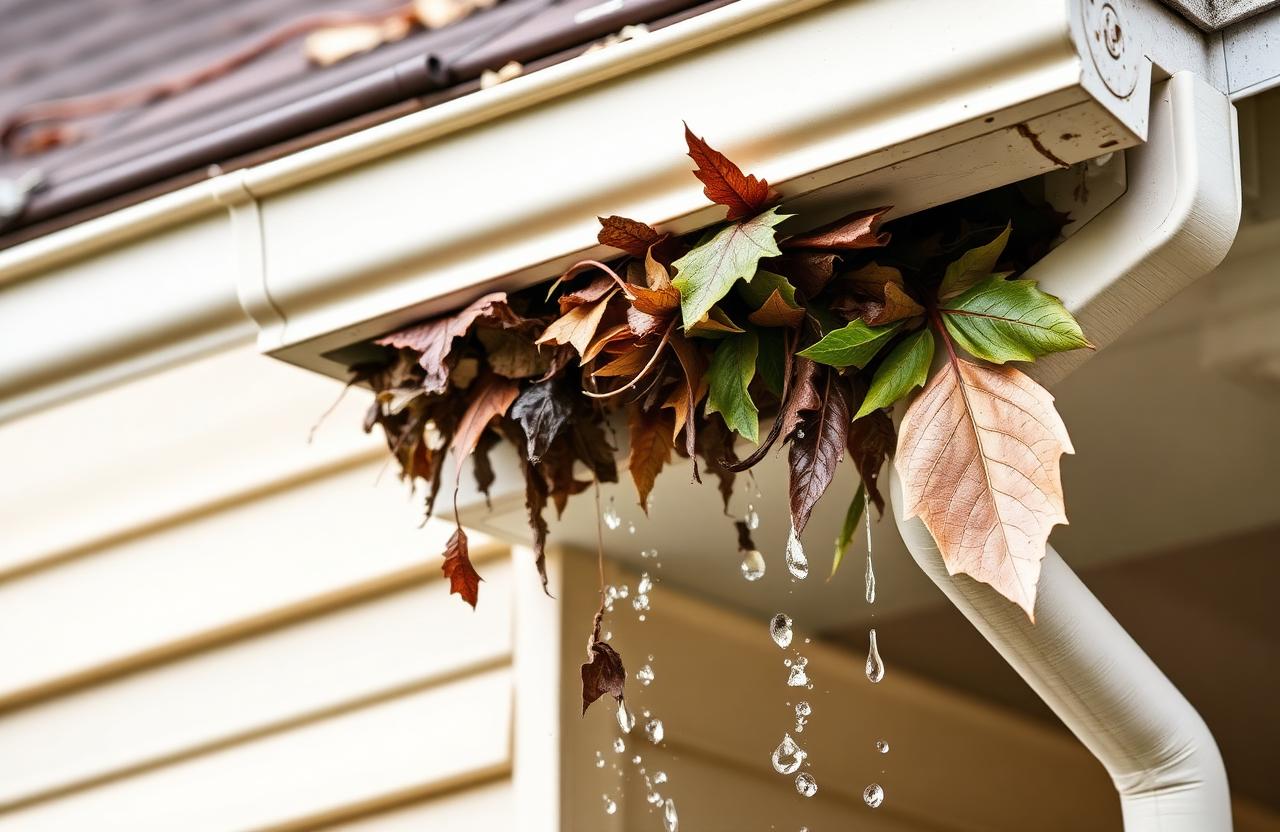
Clogs are the most commonly assumed explanation for overflowing gutters. Leaves, pine needles, and debris can restrict water flow.
However, many homeowners experience overflow even when gutters appear relatively clear.
This is because gutter performance depends on more than cleanliness.
Other contributing factors include:
- •Improper slope
- •Undersized gutters
- •High roof runoff volume
- •Poor downspout placement
Overflowing gutter signs often indicate a system design issue rather than a maintenance issue.

How Roof Size and Pitch Affect Runoff
Roof pitch influences how quickly water moves toward the gutter. Steeper roofs shed water faster, increasing runoff speed.
During heavy rain, this rapid flow can overwhelm gutters that are not sized for the volume.
Larger roof surfaces also collect more water. Even moderate rain can produce significant runoff on expansive roof areas.
According to the U.S. Department of Energy, roof design directly affects how water loads exterior drainage systems.
Why Gutter Capacity Matters More Than Homeowners Realize
Gutters come in different sizes and profiles. Not all gutters handle the same volume of water.
Homes with large or steep roofs may require larger capacity systems.
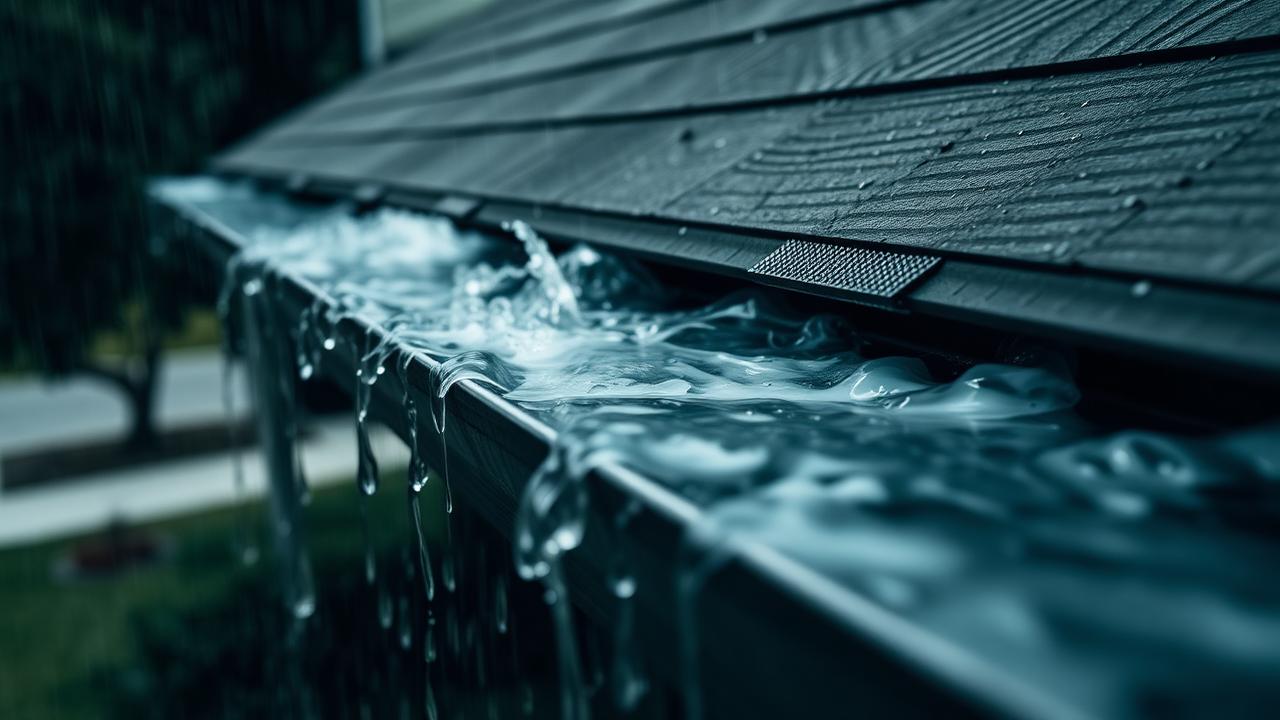
When capacity is insufficient, water backs up and spills over even when gutters are clean.
This creates overflowing gutter signs that repeat during storms.
How Gutter Pitch Influences Drainage
Gutters rely on gravity to move water toward downspouts. This requires proper pitch.
If gutters are too flat, water pools instead of flowing.
If pitch is uneven, water may collect in low spots.
Both conditions increase the likelihood of overflow during heavy rain.
Pooling water reduces effective capacity, making overflow more likely.
Why Downspout Placement Is Critical
Downspouts are exit points for gutter systems. Their placement affects how quickly water leaves the gutter.
Too few downspouts force water to travel farther, increasing backup.
Improper placement concentrates water in certain sections.
Overflowing gutter signs often appear far from the downspout because water cannot exit fast enough.

How Overflowing Gutter Signs Reveal System Imbalance
Overflowing gutter signs are rarely caused by a single failure. Instead, they usually reflect imbalance within the drainage system. When one component is stressed beyond its role, the entire system responds in visible ways.
A balanced gutter system manages three things at once: volume, speed, and exit efficiency. When these elements work together, water moves predictably from roof to ground. When one element falls behind, overflow occurs.
Overflowing gutter signs often indicate that water is arriving faster than it can exit. This may be caused by insufficient downspouts, improper spacing, or downspouts that are overwhelmed by concentrated roof runoff.
Another form of imbalance occurs when gutters are sized for average rainfall rather than peak conditions. During heavy storms, water volume exceeds capacity even though the system appears adequate during normal rain.
Common imbalance indicators include:
- •Overflow only during intense rain
- •Overflow occurring far from downspouts
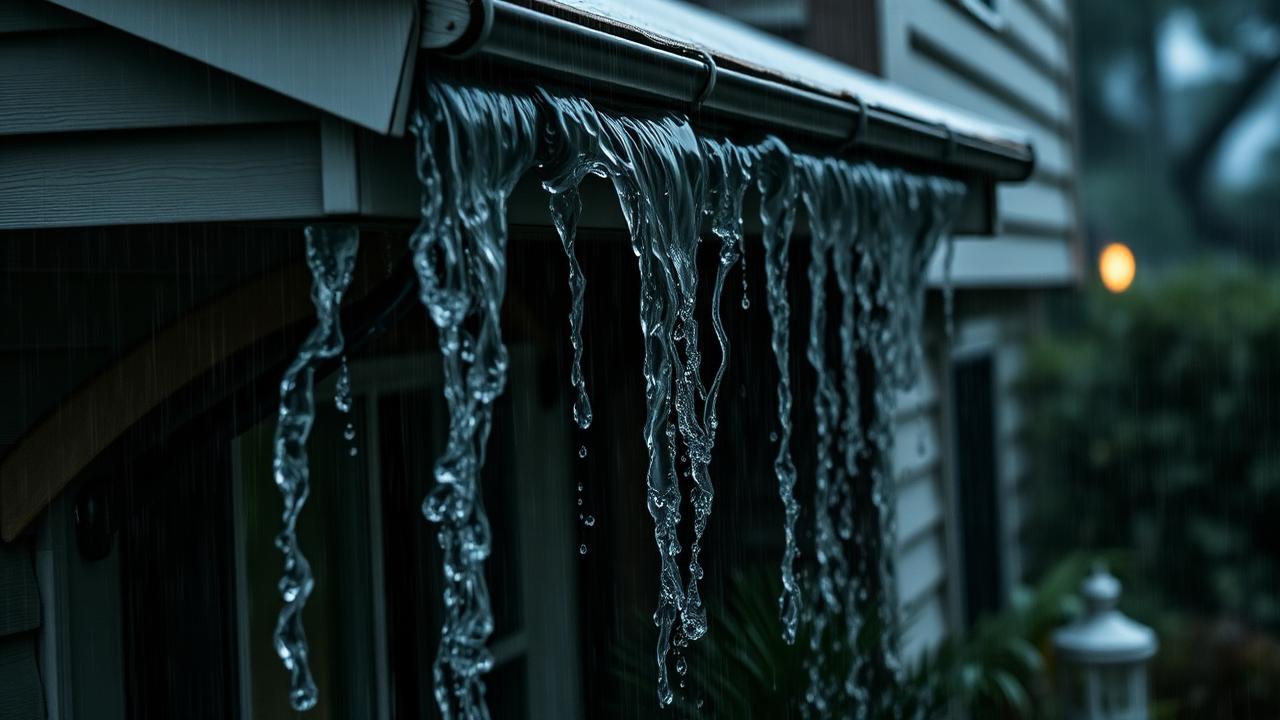
- •Water spilling evenly across long sections
Each of these overflowing gutter signs points to a mismatch between what the roof delivers and what the gutter system can manage.
Roof valleys amplify imbalance by combining water from multiple slopes. Even properly installed gutters may struggle if the valley output was not considered during system design.
Imbalance also develops over time. Changes such as roof replacement, added insulation, or regional weather shifts can increase runoff without altering the gutter system. When demand grows but capacity stays the same, overflow becomes inevitable.
Understanding imbalance reframes overflowing gutter signs as system feedback rather than isolated problems. The home is not failing. It is communicating that conditions have changed.
When homeowners recognize imbalance early, solutions are often straightforward. Adjusting pitch, adding exit points, or redistributing runoff can restore performance.
Ignoring imbalance allows stress to continue. Water repeatedly tests the weakest points until damage appears elsewhere.
Overflowing gutter signs are best interpreted as an opportunity to rebalance water movement before secondary systems are affected.
What Heavy Rain Reveals That Light Rain Does Not
Light rain rarely tests the limits of a gutter system. Heavy rain exposes weaknesses.
During intense storms, homeowners may observe:
- •Water spilling evenly along the gutter edge
- •Overflow concentrated in one area
- •Water shooting past the gutter entirely
Each pattern suggests a different underlying issue.
How Overflow Patterns Provide Clues
Where and how gutters overflow matters.
Even overflow along the entire length often indicates capacity limitations.
Localized overflow may point to pitch issues or downspout restrictions.
Overflow near corners can suggest water acceleration from roof valleys.
Observing these patterns helps interpret overflowing gutter signs accurately.

Why Roof Valleys Increase Water Load
Roof valleys channel water from multiple roof planes into one area.
This concentration dramatically increases runoff volume.
Gutters below valleys experience greater demand.
If not designed for this load, overflow occurs repeatedly.
This is one of the most common reasons overflow happens despite clean gutters.
Why Overflow Often Appears Suddenly
Gutter systems can function adequately for years before overflow becomes noticeable.
Changes such as roof replacement, added layers, or climate patterns can alter runoff behavior.
When demand increases, existing systems may no longer keep up.
This creates new overflowing gutter signs without obvious maintenance changes.
How Soil and Landscaping Can Mask the Problem
Overflow damage does not always appear immediately.
Soil may absorb water temporarily.
Landscaping can hide splashback.
Over time, however, repeated overflow affects grading and moisture levels.
Visible signs often lag behind the cause.

Why Overflow Should Be Viewed as Information
Overflowing gutter signs are not failures to panic over. They are feedback.
They show how your home handles water under stress.
This information helps guide informed decisions.
How Professional Evaluation Adds Clarity
Because multiple factors influence gutter performance, professional evaluation helps identify root causes.
At Action Exteriors, gutter assessments focus on runoff behavior rather than surface assumptions.
Homeowners can ask questions or discuss observations through the Action Exteriors contact page.
How to Interpret Overflowing Gutter Signs During Heavy Rain
Watching your gutters during a storm can feel chaotic, but these moments provide valuable information. Overflowing gutter signs reveal how water behaves when your system is under maximum pressure.
Understanding what you are seeing helps separate normal limits from developing problems.
Why Timing Matters When Observing Overflow
The timing of overflow provides clues.
Overflow that begins immediately may indicate capacity limitations.
Overflow that starts later may suggest water backing up slowly.
Delayed overflow often points to pitch or exit issues.
What Continuous Overflow Suggests
When gutters overflow steadily throughout a storm, capacity is often insufficient.
This means the system cannot handle peak runoff volume.
Increasing downspout flow or gutter size may be necessary.
According to the Building Science Corporation, water control systems must be sized for worst case scenarios, not average conditions.
What Intermittent Overflow Indicates
Overflow that comes and goes often signals uneven drainage.
Water may be pooling before releasing suddenly.
This pattern points toward pitch inconsistencies.
Localized adjustments may resolve the issue.
Why Splashback Matters
Water spilling over gutters often hits siding and trim.
Repeated splashback increases moisture exposure.
Over time, this affects exterior finishes and materials.
Overflowing gutter signs are often first noticed as siding stains.
How Climate Patterns Influence Overflow Frequency
Changes in rainfall intensity can alter gutter performance.
More frequent heavy storms increase system stress.
Homes built for older rainfall patterns may experience new overflow issues.
Climate context matters when evaluating gutter behavior.
Many homeowners assume that if gutters exist, they are automatically capable of handling whatever water the roof produces. Overflowing gutter signs challenge this assumption by revealing the hidden limits of drainage design.
Every gutter system has a maximum flow rate. This rate is influenced by gutter size, shape, slope, and the number of downspouts. When rain intensity exceeds that rate, overflow occurs regardless of cleanliness.
Overflowing gutter signs often appear during storms that exceed design assumptions. Homes built decades ago may have gutter systems sized for weather patterns that no longer apply.
Modern rainfall events tend to deliver higher intensity over shorter periods. This overwhelms systems designed for slower, steadier precipitation.
Hidden drainage limits also include:
- •Downspouts that discharge too close to the foundation
- •Elbows or bends that restrict flow
- •Long gutter runs without relief points
When these limits are reached, water has nowhere to go but over the edge.
Overflowing gutter signs caused by drainage limits often repeat under similar conditions. Homeowners may notice that overflow happens during every heavy storm but never during light rain.
This consistency provides valuable insight. It suggests the system is functioning as designed but is no longer appropriate for current conditions.
Drainage limits are rarely visible from ground level. Gutters may look intact and properly attached. The failure occurs only when demand spikes.
Recognizing drainage limits shifts the focus away from short term fixes and toward long term performance.
Instead of clearing debris repeatedly, homeowners can evaluate whether water is being given enough paths to exit safely.
Overflowing gutter signs are often the first indication that hidden limits have been reached. Responding early prevents water from finding unintended routes through siding, soil, or foundation materials.
Understanding these limits helps homeowners make proactive adjustments rather than reactive repairs.
Why One Side of the Home Overflows First
Not all gutters experience equal runoff.
Roof orientation and valleys concentrate water on certain sides.
Overflow on one elevation often reflects higher demand.
This does not always indicate failure elsewhere.
What Overflowing Gutter Signs Reveal About Water Speed and Control
When homeowners see gutters overflowing, the focus is usually on volume. However, speed is just as important. Overflowing gutter signs often reveal that water is moving faster than the system can safely manage, even if the total amount of water seems reasonable.
Roof surfaces are designed to shed water quickly. During heavy rain, water accelerates as it travels down shingles, especially on steeper slopes or smooth roofing materials. When that fast moving water reaches the gutter, it must slow down and change direction. If the transition happens too abruptly, water can overshoot the gutter edge.
This is why some overflow appears as water shooting past the gutter rather than backing up inside it. In these cases, the issue is not blockage but momentum. The gutter is physically present, but water is moving too quickly to be captured efficiently.
Several factors increase runoff speed:
- •Steeper roof pitch
- •Large uninterrupted roof planes
- •Smooth or newer roofing materials
- •Concentrated flow from valleys
According to guidance from the Building Science Corporation, controlling water speed is just as important as managing volume when designing exterior drainage systems.
Overflowing gutter signs caused by excessive speed often appear during intense but short storms. Homeowners may notice that gutters handle long, steady rain better than sudden downpours. This contrast provides a clue that velocity, not capacity, is playing a role.
Speed related overflow also explains why gutters may perform well most of the time but fail dramatically during certain storms. The system is being asked to do something it was never sized or shaped to handle.
The U.S. Department of Energy emphasizes that exterior water control systems must account for how water behaves dynamically, not just where it ends up.
Understanding speed helps homeowners interpret overflowing gutter signs more accurately. It shifts the question from "What is blocking the water?" to "How is water moving across my roof?" That distinction leads to better long-term decisions and fewer repeated surprises during heavy rain.
How Overflow Connects to Foundation Health
Water spilling near the foundation alters soil moisture.
Repeated saturation increases hydrostatic pressure.
This can contribute to foundation movement or basement moisture.
The U.S. Environmental Protection Agency highlights proper drainage as essential for foundation protection.
Why Overflow During Snow Melt Is Important
Snow melt produces sustained runoff.
Gutters may overflow even without rain.
Ice buildup can restrict flow.
These conditions reveal cold weather limitations.
How Homeowners Can Safely Observe Gutters
Observation does not require climbing ladders.
Standing at ground level during rain provides insight.
Note where water exits and where it does not.
Patterns are more valuable than single events.
Why Repeated Overflow Deserves Attention
Occasional overflow during extreme storms may be acceptable.
Repeated overflow under moderate conditions suggests design limits.
Addressing the cause prevents cumulative damage.
How Gutter Adjustments Improve Performance
Solutions may include:
- •Improving pitch
- •Adding downspouts
- •Increasing gutter size
- •Managing roof runoff points
These adjustments work together.
Why Understanding Matters More Than Quick Fixes
Temporary fixes may reduce overflow briefly.
Understanding system behavior leads to lasting improvement.
Overflowing gutter signs provide the information needed.
How Professional Insight Reduces Guesswork
Because multiple variables affect gutters, professional insight saves time.
At Action Exteriors, evaluations focus on how water moves across the entire exterior.
Homeowners can share storm observations through the Action Exteriors contact page.
How Overflowing Gutter Signs Predict Long Term Exterior Stress
Overflowing gutter signs do more than describe current water behavior. They often predict where long term exterior stress will develop if conditions remain unchanged.
Water that repeatedly overflows follows gravity. It strikes the same surfaces, saturates the same soil, and exposes the same materials again and again.
Over time, this repetition creates patterns of wear.
Siding below overflow points experiences increased moisture exposure. Paint may fade or peel faster. Trim absorbs water more frequently.
Soil near the foundation becomes compacted and saturated. Drainage slows. Hydrostatic pressure increases.
Overflowing gutter signs also correlate with:
- •Basement dampness
- •Foundation staining
- •Landscape erosion
These issues rarely appear immediately. They develop slowly, making the connection to gutters easy to miss.
When homeowners understand overflowing gutter signs as predictors rather than isolated events, decision making becomes clearer.
Instead of reacting after damage appears, homeowners can anticipate where water stress will accumulate.
Predictive awareness reduces surprise and improves planning. Adjustments made early often prevent secondary repairs.
Overflowing gutter signs also help prioritize exterior maintenance. Areas repeatedly exposed to overflow deserve closer monitoring.
This approach transforms gutter observation into a diagnostic tool.
Rather than viewing overflow as a nuisance, homeowners can use it to understand how their home responds to environmental stress.
Homes that manage water predictably tend to age more evenly and experience fewer sudden issues.
Overflowing gutter signs offer insight into that management long before damage demands attention.
Final Thoughts
Overflowing gutter signs are messages from your home during moments of stress.
They reveal how pitch, capacity, and runoff interact.
By learning to interpret what you see during heavy rain, you can protect siding, foundations, and peace of mind.