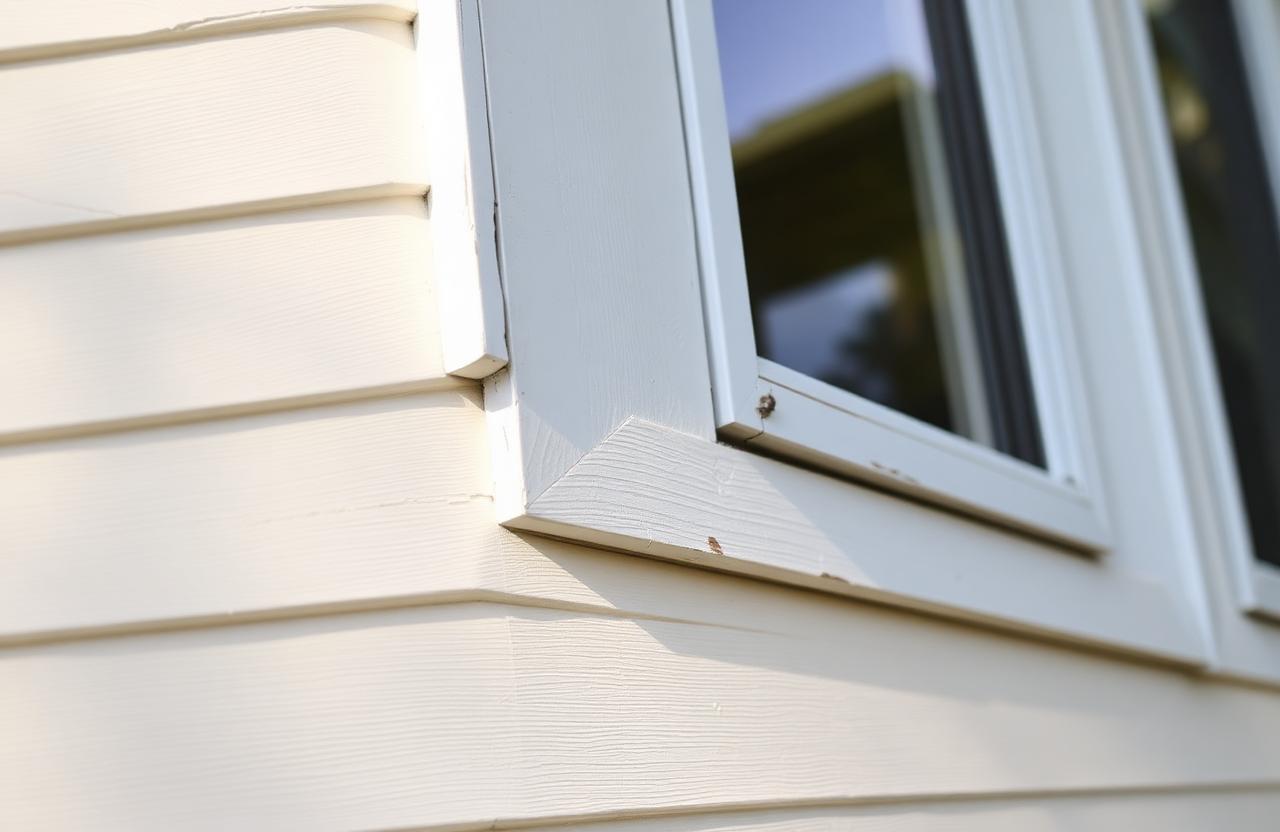
Siding problems rarely appear randomly across a home. They tend to concentrate around windows and doors. These areas are more complex, more dynamic, and more exposed than uninterrupted wall sections.
Understanding why siding window gaps develop helps homeowners recognize why damage often starts here. Small openings around windows and doors allow moisture and air to behave differently, which increases long term stress on siding systems.

Why Windows and Doors Are Natural Weak Points
Windows and doors interrupt the continuous surface of siding. Wherever that surface is broken, complexity increases.
These openings require transitions between materials that move, expand, and contract at different rates.
Siding window gaps often develop because:
- •Multiple materials meet in one location
- •Movement is concentrated around openings
- •Water is redirected rather than shed smoothly
These factors make windows and doors inherently more vulnerable.
The Role of Flashing in Managing Water
Flashing is designed to guide water away from window and door openings. It acts as a protective layer behind siding.
Proper flashing directs water downward and outward, working with gravity.
When flashing is incomplete, misaligned, or interrupted, water may enter areas not designed to get wet.
This is one of the most common contributors to siding window gaps.
Why Movement Is Greater Around Openings
Windows and doors experience more movement than solid walls. Frames expand and contract differently than siding materials.
Temperature changes cause materials to shift at different rates.
Over time, this movement places stress on joints and seals.
- •Caulking stretches and compresses
- •Trim separates slightly
- •Small gaps gradually form
These changes are subtle but cumulative.
How Small Gaps Become Entry Points
Even small siding window gaps can allow moisture to enter behind siding. Water does not require large openings.
Wind driven rain and capillary action pull moisture into narrow spaces.
Once moisture enters, it may remain trapped if drying pathways are limited.
This slow intrusion explains why damage develops gradually.

Why Caulk Alone Is Not a Long Term Solution
Caulk plays a role in sealing joints, but it is not designed to manage bulk water alone.
Caulking eventually degrades due to movement and exposure.
When homeowners rely solely on surface sealants, underlying issues may go unnoticed.
Siding window gaps often reappear even after re caulking.
How Gravity and Overlap Are Interrupted
Uninterrupted siding sheds water efficiently through overlap and gravity.
Windows and doors interrupt this pattern.
Water must be redirected around openings rather than flowing straight down.
If transitions are not detailed correctly, moisture may collect near edges.
This interruption increases reliance on flashing and drainage details.
Why Damage Often Starts Behind Trim
Trim pieces cover transitions between siding and openings. They also conceal small gaps.
Moisture entering behind trim may go unnoticed for years.
Interior materials often show signs before exterior trim appears damaged.
This hidden progression is common with siding window gaps.
How Temperature Differences Affect Seals
Windows and doors experience different temperatures than siding.
Glass and frames respond to heat differently than exterior cladding.
This difference creates stress at connection points.
Over time, seals fatigue and gaps develop.
Why One Window May Show Damage Before Others
Not all windows experience the same exposure.
Orientation, shading, and wind patterns influence moisture load.
A window facing prevailing winds may experience more stress.
This explains why siding window gaps often appear unevenly.
Early Signs Homeowners May Notice
Siding window gaps rarely announce themselves clearly.
Early signs often include:
- •Minor staining near trim
- •Softness around window corners
- •Changes after heavy rain
These signs are easy to dismiss.

Why Damage Develops Slowly
Moisture intrusion through siding window gaps usually occurs in small amounts.
Each exposure adds a little more moisture.
Over time, materials remain damp longer than intended.
This gradual process explains delayed symptoms.
How Understanding Complexity Reduces Blame
Siding problems around windows and doors are often assumed to be installation failures.
In reality, complexity increases risk even with proper installation.
Understanding this helps homeowners approach issues calmly.
How Professional Evaluation Adds Context
Evaluating siding window gaps requires looking at layers behind trim.
At Action Exteriors, evaluations focus on transitions rather than surface appearance.
This approach explains why issues concentrate around openings.
Homeowners can discuss concerns through the Action Exteriors contact page.
How Maintenance Timing Influences Siding Window Gaps
Siding window gaps are strongly influenced by maintenance timing. Small separations around windows and doors are often manageable early, but they become more complex when left unaddressed for long periods.
Maintenance does not prevent all movement. It helps limit how far siding window gaps progress by reducing exposure and slowing deterioration at stressed transitions.
When maintenance is delayed, several things often happen:
- •Sealants degrade further as sun and temperature changes continue
- •Trim joints open wider due to repeated expansion and contraction
- •Moisture exposure increases at already vulnerable connection points
Early attention allows materials to dry properly between moisture events. Late attention often means moisture has already interacted with layers behind the siding, which increases the likelihood of recurring symptoms.
Understanding siding window gaps as a progression rather than a sudden failure helps homeowners time maintenance more realistically. The goal is not perfection. The goal is controlled exposure over time.
Why Siding Window Gaps Often Reappear After Surface Repairs
Homeowners are often frustrated when siding window gaps return after repairs that seemed effective at first. This recurrence does not always indicate poor workmanship. In many cases, it reflects the fact that surface repairs address symptoms while the forces that created the gaps continue.
Siding window gaps are driven by ongoing movement, weather exposure, and material aging. Even after resealing or trim adjustments, the home continues to expand and contract, and the most complex transitions continue to experience stress.
Siding window gaps often reappear because:
- •Seasonal movement continues to pull materials apart and compress them repeatedly
- •Exposure remains higher around openings than on uninterrupted wall sections
- •Surface sealants can bridge small gaps but cannot replace complete drainage and flashing behavior
This is why repeated caulking alone rarely provides lasting resolution. It may improve short term performance, but it does not change how water and movement behave around openings.
When siding window gaps are evaluated as part of the full system, repairs can be planned more strategically instead of repeated reactively. This approach improves long term outcomes and reduces frustration.
Why Siding Window Gaps Behave Differently From Wall to Wall
Siding window gaps do not behave uniformly across a home. Even windows of the same size and age can develop gaps at different rates depending on their location and exposure.
This variation occurs because each window interacts with its surroundings differently. Nearby rooflines, overhangs, landscaping, and adjacent walls all influence how moisture and air move around an opening.
Common factors that cause siding window gaps to behave differently include:
- •Windows beneath roof valleys that receive concentrated runoff
- •Openings without overhang protection that experience direct rain exposure
- •Walls with limited airflow that dry more slowly after storms
Because these conditions vary from wall to wall, siding window gaps often develop unevenly. Understanding this prevents homeowners from assuming inconsistent damage means inconsistent installation.
Instead, uneven behavior usually reflects uneven exposure over time.
How Siding Window Gaps Influence Long Term Structural Stress
While siding window gaps often begin as surface level issues, their long term impact extends deeper into the wall system. Repeated moisture entry, even in small amounts, gradually affects structural components.
When moisture moves through siding window gaps, it can interact with:
- •Sheathing that loses strength when repeatedly damp
- •Framing members that swell and shrink with moisture cycles
- •Fasteners that corrode or loosen over time
These effects do not happen quickly. They build slowly as moisture exposure repeats. Because the process is gradual, homeowners may not connect later structural concerns back to early siding window gaps.
This is why early awareness matters. Addressing gaps before moisture reaches structural layers limits long term stress and preserves the integrity of the wall system.
Why Siding Window Gaps Are Easier to Manage Early Than Later
Siding window gaps are far easier to manage in their early stages. At this point, gaps are typically small, exposure is limited, and drying still occurs efficiently.
As gaps grow or remain open longer, conditions change:
- •Moisture reaches deeper layers and dries more slowly
- •Sealants and trim experience increased movement stress
- •Interior symptoms become more likely to appear
Early stage management focuses on maintaining transitions and monitoring exposure. Later stage management often requires addressing moisture that has already traveled beyond the surface.
Understanding this progression helps homeowners make timely decisions without panic. Siding window gaps do not demand immediate action, but they do benefit from early attention.
Why Siding Window Gaps Often Escalate After Long Periods of Stability
One of the most confusing aspects of siding window gaps is how they can remain relatively unchanged for years and then seem to worsen in a short period of time. This shift does not mean the problem suddenly appeared. It usually means long-term stresses have reached a tipping point.
For extended periods, materials around windows and doors may continue to flex and recover within acceptable limits. During this phase, siding window gaps may exist but remain small enough that drying keeps pace with moisture exposure.
Escalation often occurs when conditions change:
- •Sealants lose elasticity due to age and sun exposure
- •Repeated seasonal movement reduces material resilience
- •Moisture exposure increases during prolonged wet periods
Once these thresholds are crossed, siding window gaps can widen more quickly and allow moisture to remain longer than intended. Interior signs may then appear even though the exterior looks similar to years past.
Understanding this delayed escalation helps homeowners avoid assuming sudden failure. In most cases, siding window gaps reflect a long progression rather than a new defect.
How Siding Window Gaps Develop Over Time
Siding window gaps rarely appear suddenly. In most homes, they develop slowly as materials respond to daily movement, weather exposure, and aging. What begins as a barely noticeable separation can gradually become a recurring entry point for moisture.
Because the process is gradual, homeowners often live with early stage gaps for years without realizing the impact.
Why Daily Expansion and Contraction Matters
Every day, windows, doors, and siding materials expand and contract as temperatures change. These movements are small, but they occur thousands of times over the life of a home.
Windows and doors are rigid compared to siding. This difference in flexibility concentrates stress at the edges.
Over time, repeated movement causes:
- •Seal fatigue
- •Minor separation at joints
- •Loss of tight contact between materials
These changes contribute directly to siding window gaps.
Why Flashing Does Not Eliminate All Risk
Flashing is essential for managing water, but it does not create a permanent barrier. It is designed to redirect water that inevitably gets past exterior surfaces.
When siding window gaps form above or beside flashing, moisture can bypass intended drainage paths.
Over time, repeated exposure tests these transitions.
According to guidance from the Building Science Corporation, water control relies on redundancy rather than a single layer.
How Small Gaps Allow Moisture to Travel
Water does not need wide openings to enter wall systems. Capillary action allows moisture to move through narrow gaps.
Wind driven rain increases this effect by pushing water sideways and upward.
Once inside, moisture follows gravity and air pressure toward interior materials.
This behavior explains why siding window gaps can cause damage far from the original opening.
Trim boards cover joints and transitions, concealing small siding window gaps from view.
Moisture entering behind trim may never touch the visible siding surface.
Instead, it affects:
- •Sheathing
- •Insulation
- •Framing near openings
By the time trim shows visible deterioration, underlying damage may already exist.
How Interior Signs Connect Back to Exterior Gaps
Many homeowners first notice siding window gaps indirectly through interior symptoms.
These may include:
- •Stains near window corners
- •Soft drywall below openings
- •Odors after rain
Because these signs appear indoors, the exterior source is often overlooked.
Understanding this connection helps homeowners trace issues back to their origin.

Why Certain Windows Are Affected More Than Others
Not all windows experience the same exposure. Orientation, shading, and nearby structures influence moisture load.
Windows facing prevailing winds receive more wind driven rain.
Those without overhangs dry more slowly.
As a result, siding window gaps may develop sooner in specific locations.
How Repeated Wetting and Drying Weakens Materials
Moisture related stress is not caused by a single event. It results from repeated wetting and drying cycles.
Each cycle causes materials to swell slightly and then shrink.
Over time, this movement reduces the effectiveness of seals and fasteners.
These cycles accelerate the growth of siding window gaps.
Why Caulk Failure Is Often a Symptom, Not the Cause
Homeowners often notice cracked or separated caulk around windows and doors.
While caulk failure is visible, it usually reflects deeper movement and exposure issues.
Replacing caulk without addressing underlying transitions may provide temporary improvement.
However, siding window gaps often return as movement continues.
How Time Influences Severity
The longer siding window gaps exist, the more opportunity moisture has to affect interior materials.
Early stage gaps may allow small amounts of moisture that dry quickly.
As gaps widen or exposure increases, drying becomes less effective.
This gradual shift explains why damage often appears suddenly even though the cause existed for years.
Why Understanding Progression Reduces Panic
Seeing interior damage near windows can be alarming. Understanding how siding window gaps develop helps homeowners respond calmly.
Not every gap represents immediate failure.
Progression and patterns matter more than isolated signs.
How Professional Evaluation Helps Identify Root Causes
Evaluating siding window gaps requires looking beyond surface materials.
At Action Exteriors, evaluations focus on how siding, flashing, and openings interact over time.
This approach clarifies whether gaps are early stage or advanced.
Homeowners can discuss concerns or observations through the Action Exteriors contact page.
Why Awareness Supports Better Long Term Decisions
Understanding siding window gaps allows homeowners to plan rather than react.
Awareness supports:
- •Timely maintenance
- •Reduced interior damage
- •Greater confidence in decisions
Education shifts focus from fear to understanding.
Final Thoughts
Siding window gaps develop because windows and doors concentrate movement and moisture.
Small gaps matter because they allow water to enter slowly and repeatedly.
By understanding how these gaps form and evolve, homeowners can interpret signs accurately and protect their homes with confidence.