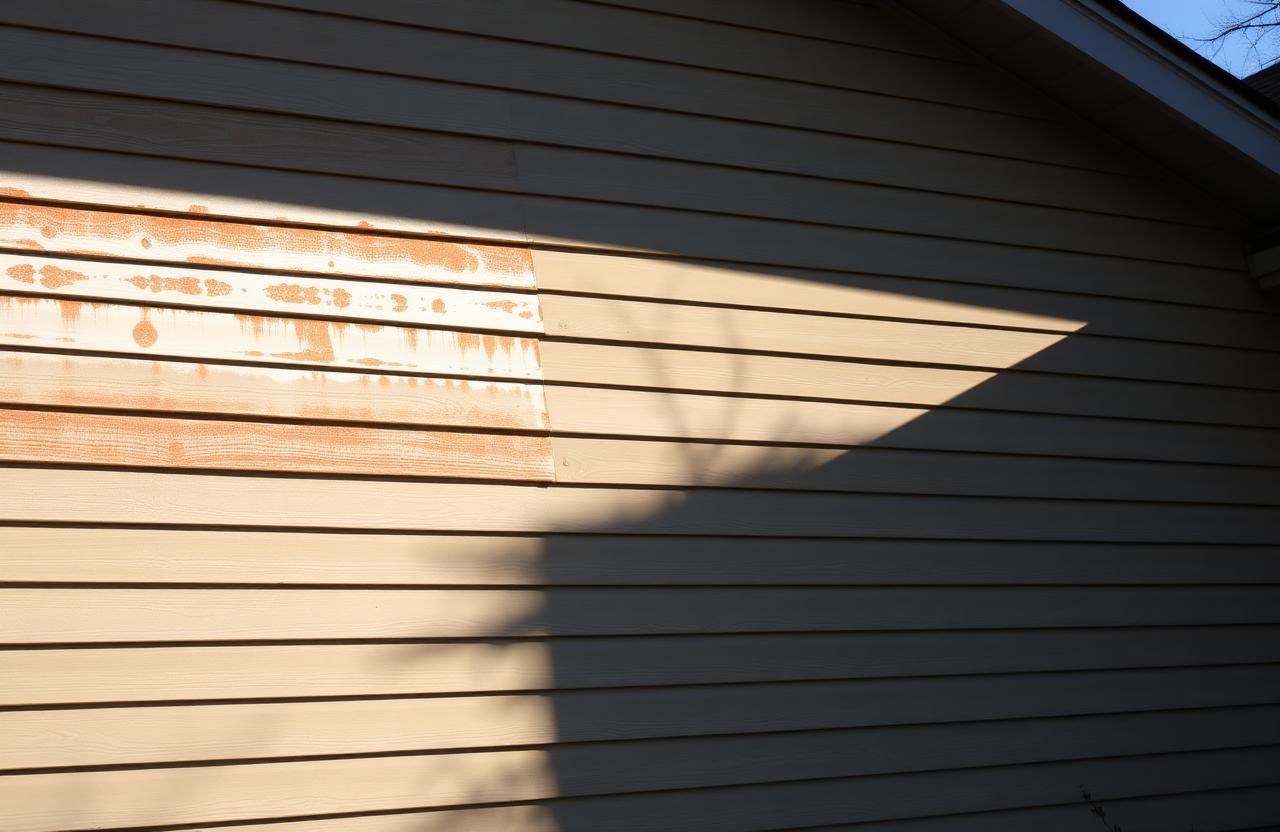
Many homeowners are surprised to learn that siding rarely wears evenly. One side of a home often shows damage, fading, or moisture issues long before the others. This uneven aging is not random. It is closely tied to how the home is positioned in relation to sun, wind, and weather.
Understanding siding wear patterns helps homeowners recognize why problems often appear on one side first. Orientation influences how siding experiences daily exposure, and that exposure accumulates over time.

Why Home Orientation Plays a Major Role in Siding Wear
A home's orientation determines how much sun, wind, and moisture each wall receives. These forces act on siding every day, even when weather feels mild.
Because exposure is uneven, siding wear patterns develop differently across the structure.
- •Some walls receive intense sunlight
- •Others stay shaded and damp longer
- •Wind driven rain strikes certain sides repeatedly
Over years, these differences shape how siding ages.

How Sun Exposure Accelerates Wear
Sunlight is one of the most powerful contributors to siding wear patterns. Ultraviolet radiation breaks down materials slowly but consistently.
Walls that receive prolonged direct sunlight experience:
- •Fading of color
- •Surface drying
- •Thermal expansion and contraction
South and west facing walls often receive the most intense sunlight. This exposure causes siding on those sides to age faster.
While fading is the most visible effect, heat also stresses materials beneath the surface.
Why Shaded Sides Face Different Risks
Sides of a home that receive less sunlight experience slower drying. Moisture from rain, snow, and humidity lingers longer.
These shaded areas often develop different siding wear patterns:
- •Darker discoloration
- •Increased moisture retention
- •Greater risk of hidden deterioration
North facing walls are commonly affected because they receive minimal direct sunlight.
Moisture that does not dry quickly places stress on siding systems over time.
The Impact of Prevailing Winds
Wind influences siding wear patterns by driving moisture against certain walls more frequently.
Homes are often exposed to consistent wind directions during storms. The same sides repeatedly receive wind driven rain.
Over time, this repeated exposure increases moisture load on those walls.
- •More frequent wetting
- •Greater water pressure at seams
- •Increased reliance on drainage and airflow
Walls facing prevailing winds often show signs of wear earlier than protected sides.

How Rain Behaves Differently on Each Side
Rain rarely falls straight down. Wind alters its path, concentrating moisture on specific surfaces.
Some walls experience:
- •Direct impact during storms
- •Repeated wetting cycles
- •Higher moisture penetration risk
Other sides may receive minimal direct rain exposure.
These differences shape siding wear patterns long before visible damage appears.
Why One Side Often Shows Damage First
When homeowners notice siding issues, they often appear on a single elevation.
This is rarely coincidence.
The most exposed side experiences:
- •More sunlight stress
- •Greater moisture exposure
- •More frequent temperature swings
These combined factors accelerate aging.
Uneven Fading and Color Changes
Uneven fading is one of the earliest visible siding wear patterns. Homeowners may notice color differences between walls.
Sun exposed sides fade faster. Shaded sides retain deeper color longer.
This contrast can make one side appear older even when siding was installed at the same time.
Fading alone does not indicate failure, but it signals uneven exposure.
How Heat Affects Material Stability
Heat causes siding materials to expand. Cooling causes contraction.
Walls exposed to prolonged heat experience more movement.
Over time, this repeated expansion and contraction contributes to:
- •Warping
- •Loosening
- •Stress at joints
These effects often appear first on sun facing walls.
Moisture related siding wear patterns are often hidden at first.
Shaded and wind exposed walls may retain moisture longer than intended.
When drying is incomplete, materials beneath the siding experience prolonged dampness.
Over time, this leads to gradual deterioration.

How Seasonal Cycles Intensify Differences
Seasonal changes amplify orientation based wear.
In winter, freeze and thaw cycles stress damp materials.
In summer, heat intensifies drying and expansion.
Each season reinforces existing siding wear patterns.
How Ultraviolet Exposure Quietly Shapes Siding Wear Patterns
Ultraviolet radiation is one of the most underestimated forces affecting siding wear patterns. Unlike rain or wind, sunlight does not feel destructive. Its effects build quietly through daily exposure.
Walls that receive consistent direct sunlight experience continuous ultraviolet breakdown. Over time, this exposure weakens surface finishes and reduces material flexibility.
Common ultraviolet related changes include:
- •Gradual color fading
- •Surface drying and brittleness
- •Increased susceptibility to cracking
These changes often appear first on south and west facing walls. Morning and afternoon sun exposure is especially impactful because it occurs during peak intensity hours.
According to the U.S. Department of Energy, prolonged ultraviolet exposure accelerates material aging and reduces exterior durability.
As siding materials lose flexibility, they respond less effectively to expansion and contraction. This increases stress at joints and edges, reinforcing existing siding wear patterns.
Homeowners may notice that sun exposed walls feel warmer to the touch and appear older even when the siding is the same age across the home.
Understanding ultraviolet exposure helps explain why siding wear patterns often appear uneven even in mild climates. The sun's impact is cumulative, not sudden.
Why Problems Rarely Appear All at Once
Siding wear patterns develop slowly. Small differences accumulate year after year.
Because exposure is consistent, the most stressed side deteriorates first.
This explains why one wall often requires attention while others remain intact.
How Homeowners Can Observe Orientation Effects
Homeowners can learn a great deal by observing how each side of the home responds to weather.
Helpful observations include:
- •Which walls dry fastest after rain
- •Where fading is most noticeable
- •Which sides feel damp or shaded
Patterns matter more than isolated events.
Why Understanding Orientation Prevents Confusion
Without understanding siding wear patterns, homeowners may assume uneven damage means poor materials.
In reality, orientation driven exposure explains most differences.
This understanding prevents unnecessary concern and supports informed planning.
How Professional Evaluation Adds Context
Evaluating siding wear patterns requires looking at the whole home.
At Action Exteriors, assessments consider orientation, exposure, and environmental factors.
This approach explains why one side ages faster and how to manage it.
Questions about siding wear or uneven aging can be discussed through the Action Exteriors contact page.
How Siding Wear Patterns Become More Noticeable Over Time
Siding wear patterns rarely stand out during the early years of a home's life. Differences between walls tend to be subtle at first. As seasons pass, those differences become easier to recognize.
The same exposures that quietly influence siding day after day begin to leave visible marks. Sun, wind, and moisture reinforce existing patterns rather than creating new ones.
Why Wear Accelerates on the Most Exposed Sides
Once siding begins to age unevenly, the most exposed walls often deteriorate at a faster rate. This acceleration occurs because stressed materials become less resilient over time.
Sun exposed siding dries out more quickly. Repeated drying reduces flexibility and increases brittleness.
Meanwhile, moisture exposed walls retain dampness longer, which stresses materials in a different way.
- •Heat weakens surface coatings
- •Moisture increases material fatigue
- •Temperature swings amplify movement
These forces compound, making siding wear patterns more pronounced.
How Seasonal Cycles Reinforce Orientation Based Wear
Seasonal weather changes act as a multiplier for orientation driven siding wear patterns.
During summer, sun facing walls absorb heat for extended periods. Expansion and contraction become more extreme.
In winter, shaded walls remain cold and damp longer, increasing stress from freeze and thaw cycles.
Each season reinforces the same differences rather than resetting them.
Why Moisture Exposure Is Uneven Even During the Same Storm
Storms do not affect every side of a home equally. Wind direction determines where rain impacts with the greatest force.
Walls facing prevailing winds experience:
- •Higher moisture volume
- •Greater water pressure at seams
- •More frequent wetting cycles
Sheltered sides may remain relatively dry.
Over years, this imbalance shapes siding wear patterns clearly.
How Uneven Drying Contributes to Long Term Damage
Drying speed is just as important as wetting frequency. Walls that dry quickly recover from moisture exposure.
Shaded or wind blocked walls often dry slowly.
When moisture remains longer than intended, materials beneath the siding experience prolonged stress.
This slow drying process contributes to hidden deterioration that appears later.
Why Fading Is Often the First Visible Sign
Color changes are usually the earliest visible siding wear patterns homeowners notice.
Sun exposed walls fade first because ultraviolet radiation breaks down pigments.
This fading may appear uneven even when siding was installed at the same time.
Although fading is cosmetic, it signals exposure imbalance that affects performance as well.
Warping and Movement Over Time
As siding materials age, their ability to handle movement decreases.
Walls exposed to greater heat experience more expansion cycles.
Over time, this can lead to:
- •Slight warping
- •Loose edges
- •Stress at joints
These changes are more common on the most exposed sides of the home.
Why One Wall Often Requires Attention First
When siding issues require repair or replacement, it is common for only one elevation to be affected initially.
This does not indicate poor materials or installation.
It reflects years of uneven exposure concentrated on that side.
Understanding siding wear patterns helps homeowners accept this as expected behavior.
How Orientation Affects Maintenance Timing
Because siding does not age uniformly, maintenance timing often differs by elevation.
Some walls may require attention sooner due to greater exposure.
Other walls may remain in good condition for years longer.
Planning maintenance based on exposure rather than appearance alone leads to better outcomes.
Why Siding Wear Patterns Differ by Climate and Region
While home orientation plays a major role in siding wear patterns, regional climate amplifies these effects. Homes in different climates experience exposure in unique ways.
In humid regions, moisture lingers longer on shaded walls. This increases the risk of slow drying and moisture related wear.
In dry and sunny regions, intense ultraviolet exposure accelerates fading and surface breakdown on sun facing walls.
Wind patterns also vary by region. Coastal and plains areas often experience stronger prevailing winds, which drive rain against specific elevations repeatedly.
According to research from the Building Science Corporation, exterior durability depends on how well materials dry between exposure events.
When orientation aligns with regional exposure patterns, siding wear patterns become more pronounced.
For example:
- •North facing walls in humid climates retain moisture longer
- •West facing walls in sunny climates fade faster
- •Windward sides experience greater moisture pressure
These regional influences explain why similar homes age differently in different locations.
Understanding climate context helps homeowners interpret siding wear patterns accurately and avoid assuming material defects where exposure is the real cause.
Why Orientation Should Be Considered in Evaluations
Evaluating siding without considering orientation provides an incomplete picture.
A wall that shows wear may simply be the most exposed rather than defective.
At Action Exteriors, evaluations include how sun, wind, and moisture interact with each elevation.
This context helps homeowners understand why wear appears uneven.
Why Siding Wear Patterns Influence Repair and Replacement Decisions
Siding wear patterns do more than explain why one wall looks older than another. They directly influence how and when repairs or replacement should be approached.
When siding ages unevenly, homeowners often assume the entire exterior has reached the same point of decline. In reality, exposure driven siding wear patterns mean some elevations experience significantly more stress than others.
This difference affects decision making in several ways:
- •Repairs may be needed on one wall while others remain structurally sound
- •Maintenance timing may vary by elevation rather than the entire home
- •Material performance must be evaluated in context of exposure
Ignoring siding wear patterns can lead to premature replacement or unnecessary repairs. Understanding where wear is concentrated allows homeowners to make targeted, cost-effective decisions.
Siding wear patterns also help explain why a repair that works on one elevation may not perform the same way on another. Exposure conditions differ, and solutions must account for that difference.
By recognizing how siding wear patterns shape repair needs, homeowners can plan work based on performance rather than appearance alone.
How Siding Wear Patterns Shape Long Term Expectations
Siding wear patterns influence not only how a home looks today, but how it will age in the future. Once uneven exposure begins to shape material behavior, those patterns tend to repeat.
Homeowners who understand siding wear patterns are better prepared for what comes next. They recognize that the most exposed sides will continue to require more attention over time.
This awareness changes expectations:
- •Maintenance becomes planned rather than reactive
- •Visual differences between walls feel expected instead of alarming
- •Future repairs feel predictable rather than surprising
Siding wear patterns also help homeowners understand why exterior aging rarely progresses evenly. Exposure does not reset year to year. It compounds.
When expectations align with reality, homeowners are less likely to interpret normal aging as failure. They can evaluate changes calmly and respond intentionally.
Understanding siding wear patterns supports confidence. It reframes uneven aging as a natural outcome of orientation and exposure rather than a sign of poor materials or installation.
How Homeowners Can Track Siding Wear Patterns
Homeowners can monitor siding wear patterns through simple observation.
Helpful practices include:
- •Comparing color changes between walls
- •Noting which sides dry fastest
- •Observing moisture behavior after storms
Tracking these differences over time provides valuable insight.
Why Uneven Wear Does Not Mean Immediate Failure
Uneven siding wear patterns often cause concern, but they do not always signal urgent problems.
Gradual aging is expected in exterior materials.
Understanding exposure driven wear helps homeowners respond appropriately rather than reactively.
How Knowledge Reduces Unnecessary Worry
Once homeowners understand how orientation influences siding wear patterns, anxiety often decreases.
Differences between walls become understandable rather than alarming.
This knowledge supports confident decision making.
Final Thoughts
Siding wear patterns are shaped by home orientation, sun exposure, prevailing winds, and moisture behavior.
Because exposure is uneven, one side of a home often ages faster than others.
Understanding these patterns helps homeowners interpret changes calmly and plan maintenance with confidence.