Commercial roofs and residential roofs may serve the same basic purpose, but they fail in very different ways. Homeowners and property managers often assume that roofing problems follow similar patterns regardless of building type. In reality, commercial roof failure is shaped by scale, materials, usage, and design choices that do not exist in residential systems.
Understanding these differences helps explain why timelines vary, why warning signs look different, and why repair strategies are rarely interchangeable. Commercial roofs are not simply larger versions of residential roofs. They operate under entirely different conditions.
This article breaks down how and why commercial roof failure develops differently, without assigning blame or oversimplifying complex systems.

Why Scale Changes Everything
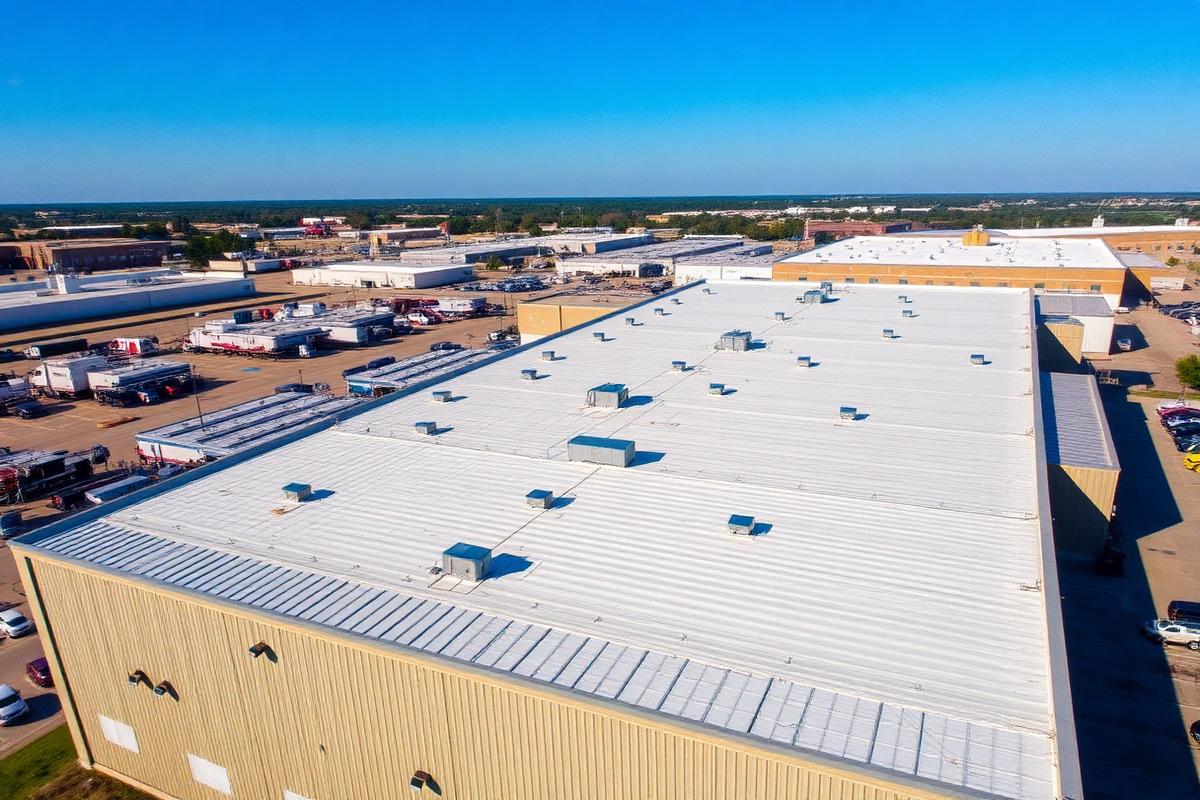
The most obvious difference between commercial and residential roofs is size. Commercial roofs often cover thousands or even hundreds of thousands of square feet. This scale fundamentally changes how water, heat, and stress behave.
On a residential roof, water sheds quickly toward the edges. Gravity and slope work together to move moisture off the surface. On many commercial roofs, especially low slope systems, water travels slowly and remains on the roof longer.
This extended exposure increases the likelihood of ponding, membrane stress, and gradual material degradation. Commercial roof failure often begins with subtle moisture accumulation rather than dramatic leaks.
According to the National Roofing Contractors Association, roof size and slope are among the most important factors influencing drainage performance and long term durability.

How Roofing Materials Influence Failure Patterns
Residential roofs typically rely on shingles or tiles that shed water through overlapping layers. Commercial roofs use membranes, built up systems, or single ply materials designed to resist standing water.
These materials behave differently under stress. Instead of individual pieces failing visibly, commercial roofing materials tend to fail at seams, penetrations, or stress points.
Commercial roof failure often appears as slow membrane separation, seam fatigue, or loss of adhesion rather than missing components.
Because the surface often looks intact, problems may go unnoticed longer.
Why Low Slope Design Alters Drainage Behavior
Many commercial roofs are low slope by design. This allows for equipment placement and efficient use of space, but it also slows water movement.
Water that remains on the roof increases exposure time. Even small imperfections become more significant when moisture lingers.
Commercial roof failure frequently involves areas where drainage is restricted, such as around drains, scuppers, or transitions.
Residential roofs rarely experience this type of prolonged exposure.
The Role of Expansion and Contraction
Commercial roofs experience large temperature swings across expansive surfaces. As materials heat and cool, they expand and contract repeatedly.
This movement places stress on seams, fasteners, and attachments.
Over time, fatigue develops. Commercial roof failure often occurs where movement is greatest rather than where materials appear weakest.
According to research published by the U.S. Department of Energy, thermal movement is a leading contributor to membrane stress in large roof systems.
Why Visual Damage Is Less Obvious
Residential roof problems are often easy to spot. Missing shingles, lifted edges, or visible sagging provide clear signals.
Commercial roof failure is usually less obvious. Membranes may remain intact while seams slowly deteriorate beneath the surface.
Water intrusion may occur far from visible damage as moisture travels horizontally.
This makes routine inspection more critical in commercial settings.
How Penetrations Increase Complexity
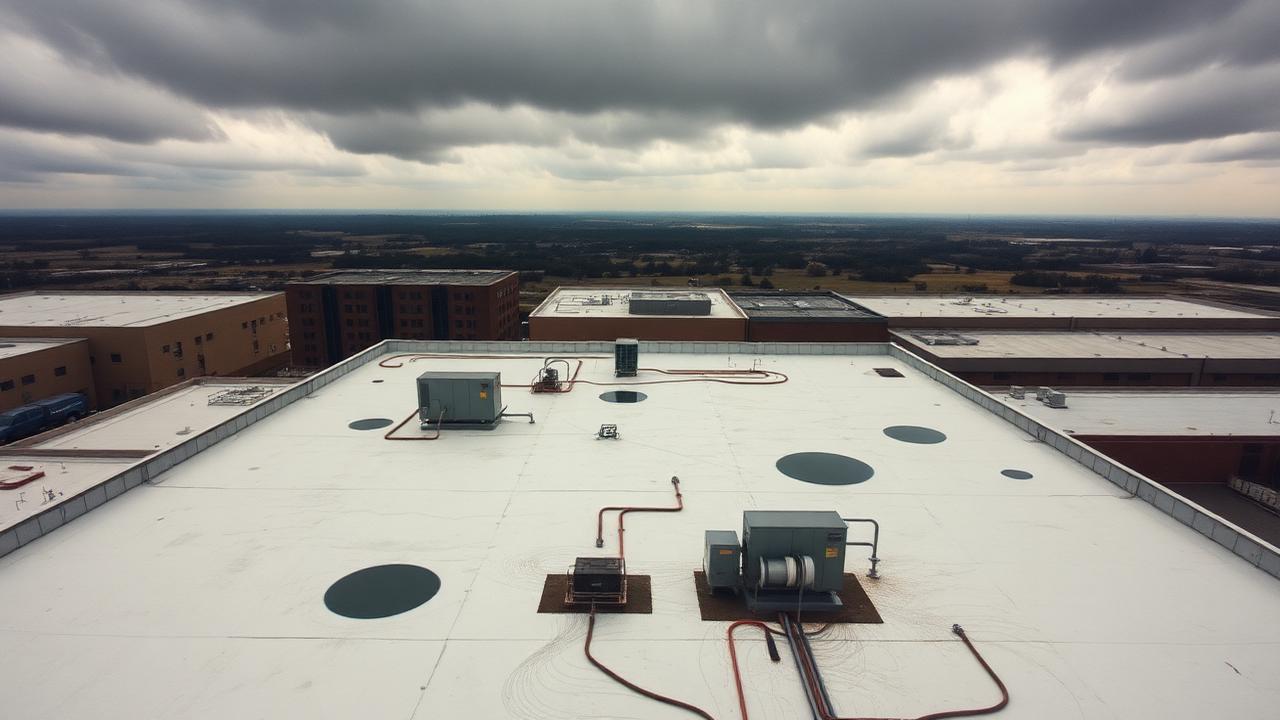
Commercial roofs typically contain far more penetrations than residential roofs. HVAC units, vents, skylights, and conduits all interrupt the roofing surface.
Each penetration creates a transition that must accommodate movement, moisture, and load.
Commercial roof failure frequently begins at these transition points because they concentrate stress.
Residential roofs have fewer penetrations and simpler detailing.
Why Timelines Differ Between Building Types
Residential roof failure often progresses quickly once it begins. Shingle loss or underlayment exposure can lead to rapid leaks.
Commercial roof failure tends to progress slowly at first. Moisture intrusion may occur over long periods before interior signs appear.
This delayed visibility can create the impression that problems arise suddenly, even though they developed gradually.

How Usage Changes Risk Profiles
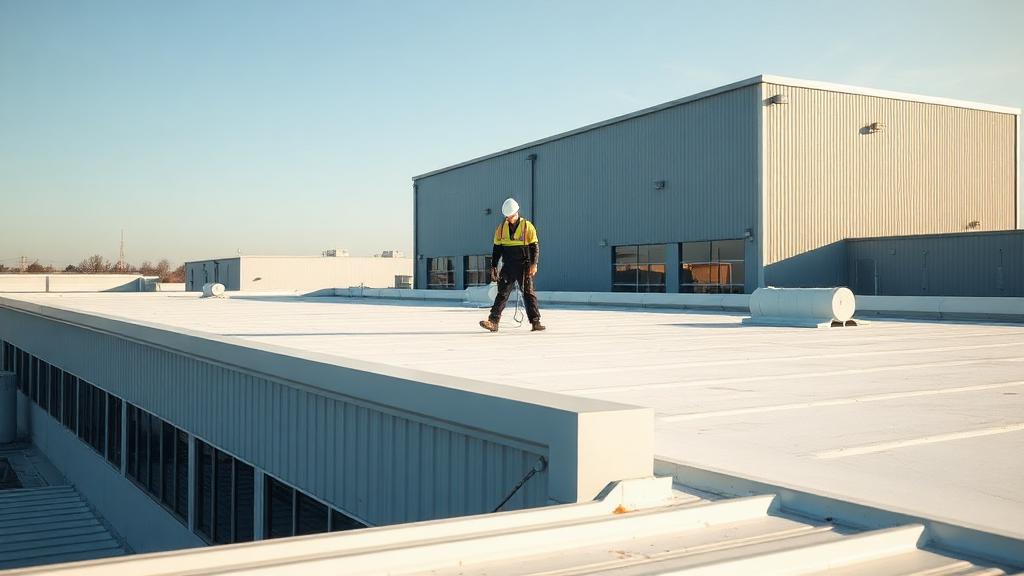
Residential roofs are rarely accessed after installation. Commercial roofs are accessed regularly for maintenance, inspections, and equipment servicing.
Foot traffic introduces wear that residential roofs do not experience.
Over time, repeated access increases membrane abrasion and stress at walk paths.
Commercial roof failure often correlates with high traffic zones.
Why Residential Comparisons Can Be Misleading
Applying residential expectations to commercial roofs leads to misunderstanding.
Commercial roofs are engineered systems with different performance metrics.
Failure does not always mean visible damage. It often means loss of watertight integrity at specific points.
Understanding these differences is essential for realistic planning and maintenance.
Beyond design and materials, daily usage plays a major role in how commercial roof failure develops. Unlike residential roofs, commercial systems are active environments. People, equipment, and maintenance routines all influence how stress accumulates over time.
Understanding these operational factors helps explain why commercial roof failure timelines rarely align with residential expectations.
How Foot Traffic Accelerates Wear
Commercial roofs are routinely accessed for HVAC servicing, inspections, and general maintenance. Each visit introduces friction, compression, and localized stress.
Even when walk pads are present, repeated traffic concentrates wear in predictable paths.
Over time, membranes thin, seams weaken, and attachment points loosen.
Residential roofs do not experience this repetitive load.
Why Commercial Roof Failure Is Often a Management Issue, Not a Material Issue
When commercial roof failure occurs, it is often attributed to materials reaching the end of their lifespan. While material aging plays a role, many failures are shaped just as strongly by management decisions, access patterns, and operational priorities. Commercial roofs exist within active business environments, and those environments influence how stress accumulates over time.
Unlike residential roofs, commercial systems are rarely left alone. They support ongoing activity. Maintenance teams access them regularly. Contractors install, service, and replace rooftop equipment. Each interaction introduces incremental risk. These interactions are rarely coordinated around roofing performance, yet they directly affect it.
One of the most overlooked contributors to commercial roof failure is responsibility fragmentation. In many facilities, no single party owns the roof as a system. HVAC contractors focus on equipment. Electrical teams focus on conduits. Facility managers focus on operations. Roofing concerns often become secondary unless a leak interrupts business.
This fragmentation allows small issues to persist unnoticed. A poorly resealed penetration after equipment service may not leak immediately. A displaced walkway pad may expose membrane edges to abrasion. A drain partially blocked by construction debris may still function during light rain. Each issue alone seems insignificant. Together, they shorten roof lifespan.
Commercial roof failure often emerges where coordination breaks down. The roof becomes the shared surface impacted by many trades but fully managed by none. Over time, these overlapping stresses accumulate quietly until performance thresholds are crossed.
Another management-related factor is deferred decision-making. Commercial buildings often operate under budget cycles and operational pressures. If a roof appears visually intact and interior conditions remain dry, action is postponed. Unlike residential homeowners, property managers may not experience the roof emotionally. The roof is an asset, not a living environment.
This distance delays response to early warning signs. Minor ponding, recurring sealant repairs, or small membrane blisters may be noted but not addressed holistically. Commercial roof failure often reflects years of incremental compromise rather than sudden breakdown.
According to guidance from the National Institute of Building Sciences, roof system longevity depends as much on coordinated maintenance planning as on material selection. When oversight focuses only on individual repairs instead of system behavior, vulnerabilities multiply.
Understanding commercial roof failure as a management challenge shifts how prevention is approached. Instead of asking whether materials are defective, the better question becomes how stress is introduced, distributed, and monitored across the system.
This perspective does not assign blame. It clarifies responsibility. Commercial roofs perform best when they are treated as shared infrastructure requiring coordination, documentation, and proactive oversight.
How Risk Accumulates Quietly Before Commercial Roof Failure Becomes Visible
One of the defining characteristics of commercial roof failure is how quietly it develops. Unlike residential roofs, where damage often announces itself through missing shingles or visible leaks, commercial systems absorb stress internally long before symptoms appear inside the building.
This delayed visibility is not accidental. Commercial roofs are designed to resist exposure and maintain appearance even as performance degrades. Membranes remain intact. Surfaces look continuous. Water intrusion pathways develop beneath the surface, hidden by layers intended to protect the structure.
Risk accumulation begins with small deviations from ideal conditions. A drain that empties slightly slower than designed. A seam that flexes more than intended during thermal cycles. A flashing detail that experiences repeated movement near equipment bases.
Each deviation increases exposure time. Water lingers longer. Materials remain damp longer. Thermal stress concentrates instead of dispersing. None of these conditions create immediate failure. Instead, they reduce tolerance.
Commercial roof failure occurs when tolerance is exhausted. At that point, even a routine weather event can trigger leakage or membrane separation. To building occupants, the failure feels sudden. To the system, it was inevitable.
Low-slope design amplifies this effect. Water travels slowly and spreads laterally. Moisture entering at one location may surface dozens of feet away. This makes diagnosis difficult and encourages reactive repairs that address symptoms rather than sources.
Risk also accumulates unevenly. High-traffic areas, equipment zones, and drainage paths experience stress far beyond the rest of the roof. These zones act as failure accelerators. When failure occurs, it often originates in these areas even though the majority of the roof remains intact.
Climate intensifies accumulation. Commercial roofs experience prolonged heat exposure from mechanical systems, reflected sunlight, and interior operations. This heat increases expansion cycles and accelerates material fatigue. Residential roofs cool down more predictably.
The Building Science Corporation emphasizes that durability depends on a system's ability to dry between exposure events. When drying potential decreases, damage progression accelerates even without increased rainfall.
Because risk accumulation is invisible, commercial roof failure is best prevented through pattern recognition rather than symptom response. Ponding frequency, recurring repair locations, and changes in membrane texture matter more than dramatic damage.
Understanding this progression helps property managers move from reactive repair toward strategic oversight. Commercial roof failure is not a moment. It is a process. The earlier that process is recognized, the more options remain available.
Why Commercial Roof Failure Often Feels Sudden Even When It Is Not
One of the most frustrating aspects of commercial roof failure for property owners and managers is how abruptly it seems to occur. A roof may appear functional for years, only to develop significant leaks or operational disruptions with little warning. This perception of sudden failure is common, but it is rarely accurate.
Commercial roof failure usually follows a long period of quiet degradation. The system does not collapse all at once. Instead, it slowly loses margin. Each year of exposure, each thermal cycle, and each maintenance interaction reduces the roof's ability to tolerate stress. When that tolerance reaches a critical point, failure becomes visible.
The problem is that commercial roofs are designed to look stable even when performance is declining. Membranes remain visually intact. Seams may hold under normal conditions. Drainage systems may function adequately most of the time. This creates what can be described as a false sense of stability.
False stability occurs when a roof still performs under average conditions but lacks resilience under stress. Heavy rainfall, rapid snow melt, extreme heat, or high winds push the system beyond its reduced capacity. At that moment, failure appears sudden, even though the underlying causes have been present for years.
This dynamic is particularly common in large commercial buildings where roof surfaces span wide areas. Minor inconsistencies are harder to detect visually. Water can travel long distances beneath membranes before surfacing indoors. By the time an interior leak appears, moisture may have already affected insulation, decking, or structural components.
Another reason commercial roof failure feels sudden is decision deferral. When early warning signs are subtle, such as recurring minor repairs or intermittent ponding, they are often deprioritized. These signs do not interrupt operations, so they feel manageable. Over time, however, the roof transitions from manageable to vulnerable without a clear dividing line.
According to research referenced by the National Institute of Building Sciences, building envelope failures often occur after prolonged periods of marginal performance rather than sudden catastrophic events. The absence of visible distress delays intervention, even as risk accumulates.
Commercial roof failure also feels sudden because the consequences escalate quickly once leakage begins. Moisture spreads rapidly across insulation layers, reducing thermal performance and increasing energy demand. Interior finishes may show damage shortly after the first leak, amplifying the perception of abrupt failure.
Operational impact compounds this effect. Leaks can disrupt tenants, damage inventory, or require temporary closures. What was previously an abstract maintenance concern becomes an immediate operational problem. The contrast between prior stability and sudden disruption reinforces the feeling that failure came out of nowhere.
Understanding this pattern helps property owners reframe expectations. Commercial roofs do not fail randomly. They fail when accumulated stress exceeds remaining tolerance. The visible event is only the final stage of a long process.
Recognizing this reality encourages earlier engagement, even when the roof still appears serviceable. Addressing patterns rather than waiting for symptoms preserves options and reduces the likelihood of emergency response.
Commercial roof failure feels sudden because visibility lags behind reality. When performance is evaluated proactively instead of reactively, the sense of surprise diminishes and long term outcomes improve.
Why Equipment Loads Matter
Commercial roofs often support heavy equipment. HVAC units, exhaust systems, and solar installations all add weight.
These loads create constant pressure on the roof assembly.
Movement from vibration and thermal cycling increases stress.
Commercial roof failure often occurs near equipment bases where movement and weight combine.
Routine access is necessary, but it also increases exposure to accidental damage.
Dropped tools, dragged equipment, and improper foot placement can compromise membranes.
Damage may not be visible immediately.
Small punctures or abrasions can allow moisture entry that goes unnoticed for long periods.
Why Failure Often Appears Far From the Cause
Water entering a commercial roof system rarely travels straight down.
Low slope design allows moisture to migrate horizontally.
This means interior leaks may appear far from the original breach.
Commercial roof failure is often diagnosed incorrectly without understanding this behavior.

How Operational Demands Shorten Timelines
Commercial buildings operate continuously. Climate control, lighting, and equipment generate heat.
This constant thermal load increases expansion and contraction cycles.
Over time, material fatigue accelerates.
Residential roofs experience more predictable thermal patterns.
Why Maintenance Schedules Differ
Commercial roofs require proactive inspection.
Waiting for visible failure often means damage is already extensive.
Industry guidance from the Building Science Corporation emphasizes early detection in large roof systems.
Residential roofs can often rely on visual cues.
How Commercial Roof Failure Impacts Operations
Roof failure in commercial settings affects more than structure.
Leaks can disrupt operations, damage inventory, and impact safety.
Downtime carries financial consequences.
This increases the importance of prevention and monitoring.
Why Emergency Response Looks Different
Emergency response on commercial roofs often prioritizes containment over repair.
Temporary solutions may cover large areas to protect operations.
Permanent repairs require planning around business needs.
This contrasts with residential emergency response.
How Professional Oversight Reduces Risk
Because of complexity, commercial roofs benefit from experienced oversight.
Regular inspections identify early signs of commercial roof failure.
At Action Exteriors, commercial evaluations focus on usage patterns as much as material condition.
Property managers can discuss assessment options through the Action Exteriors contact page.
Why Timelines Should Be Interpreted Differently
Commercial roof failure timelines are shaped by scale, use, and exposure.
Expecting residential longevity benchmarks leads to misaligned planning.
Understanding operational stress supports realistic maintenance strategies.

Final Thoughts
Commercial roofs fail differently because they live differently.
Scale, materials, foot traffic, and equipment create unique stress patterns.
Recognizing these differences allows property owners to plan proactively rather than react to failure.