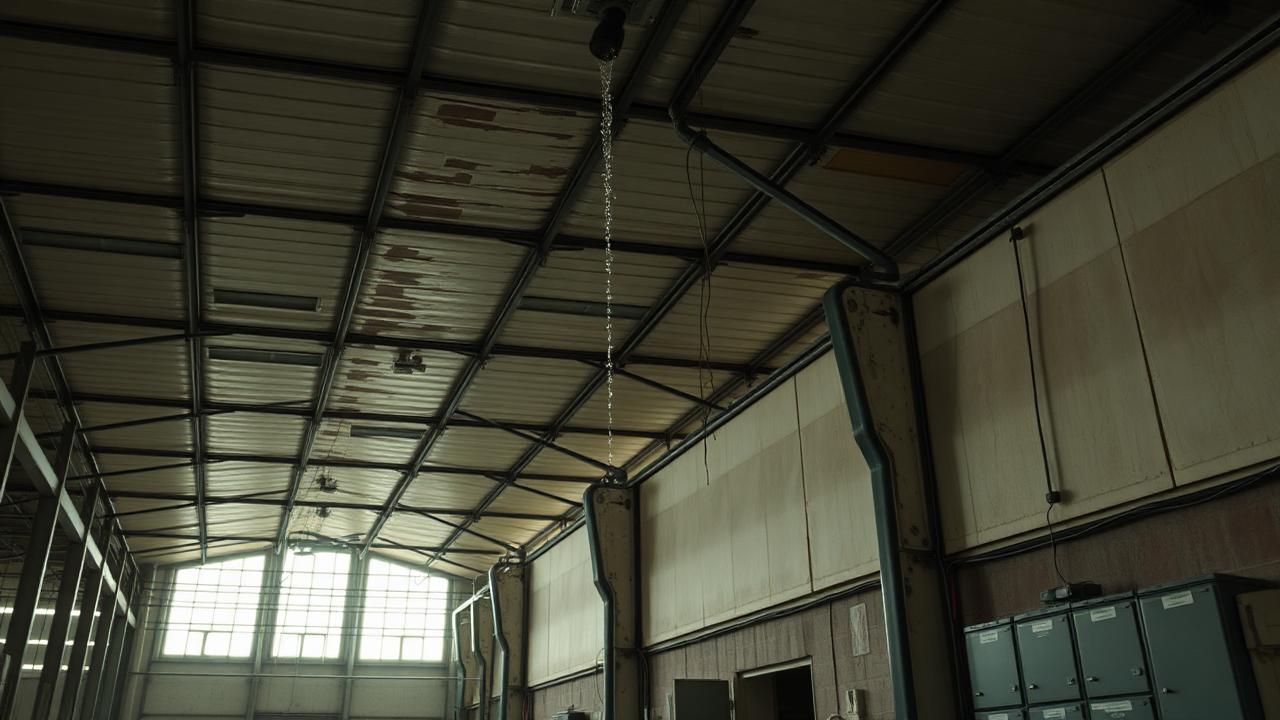
Commercial roof problems rarely stay small for long. What begins as a minor issue can escalate into widespread disruption faster than most property owners expect. This is not because commercial roofs are poorly built, but because the environments beneath them are more complex, more active, and more vulnerable to interruption.
Understanding commercial roof escalation requires looking beyond the roof surface itself. The true reason issues spread quickly lies in how commercial buildings are used, how interiors respond to moisture, and how operational demands amplify damage.
Unlike residential homes, commercial properties operate continuously. People, equipment, inventory, and systems rely on the roof to perform without interruption. When that performance is compromised, consequences multiply quickly.
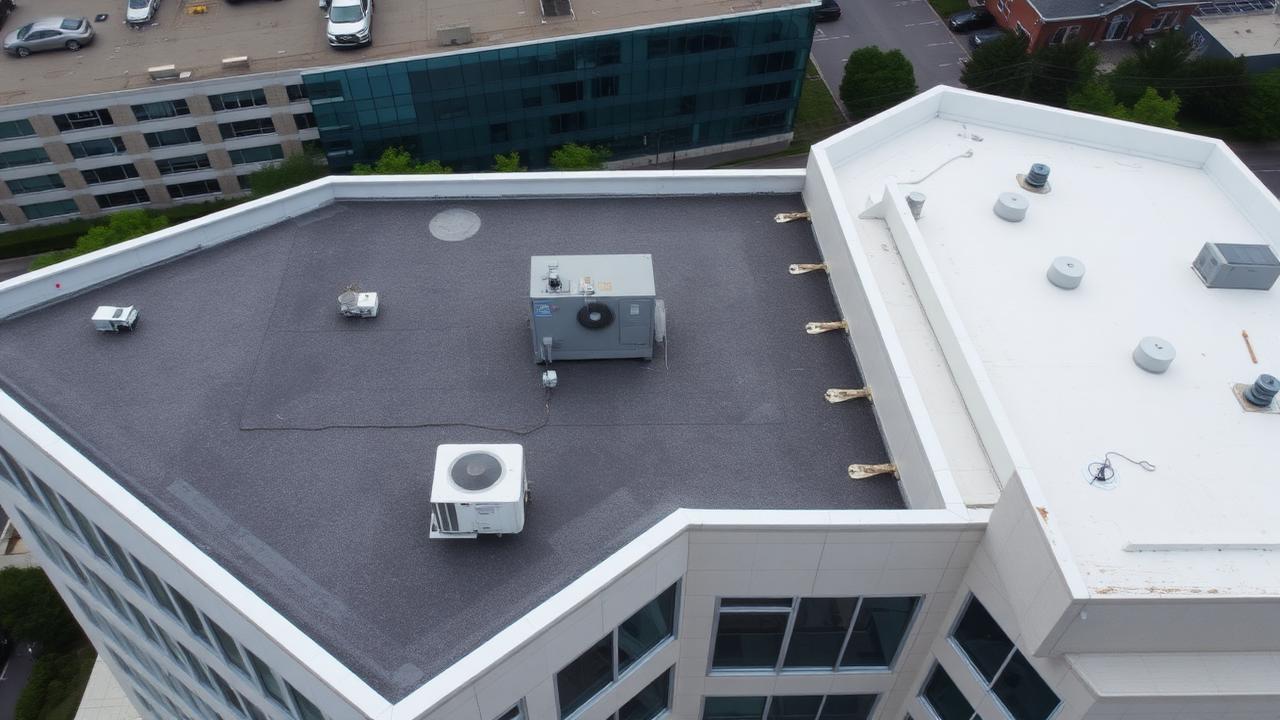
Why Commercial Interiors Are More Vulnerable to Roof Issues
Commercial interiors are designed for occupancy, productivity, and equipment operation, not moisture tolerance. Many spaces contain sensitive materials that respond poorly to even brief exposure.
Ceiling systems, insulation, electrical infrastructure, and mechanical components are often suspended or integrated throughout the interior. When water enters, it spreads across these systems rapidly.
A residential leak may affect one room. A commercial leak may affect an entire floor, production line, or occupied area.
Commercial roof escalation often begins when water contacts materials that cannot dry quickly or safely while operations continue.
How Ceiling Systems Accelerate Damage Spread
Drop ceilings and suspended grid systems are common in commercial buildings. These systems conceal utilities and provide acoustic control, but they also allow water to travel laterally.
When moisture enters above the ceiling plane, it can migrate far from the original entry point before becoming visible.
By the time stains or drips appear, a large area may already be affected.
This hidden spread is a major driver of commercial roof escalation.
Why Equipment Exposure Raises the Stakes
Commercial interiors often house electrical panels, data systems, HVAC distribution, and specialized equipment. These components are highly sensitive to moisture.
Even small leaks can interrupt power, compromise controls, or require shutdowns for safety reasons.
According to guidance from the Occupational Safety and Health Administration, moisture intrusion near electrical systems creates serious safety hazards that must be addressed immediately.
This makes commercial roof escalation not just a maintenance issue, but a safety concern.
Why Commercial Buildings Cannot Tolerate Downtime
Commercial properties are built around continuous use. Offices, warehouses, retail spaces, and medical facilities all rely on uninterrupted operation.
Roof issues that force shutdowns affect revenue, schedules, and contractual obligations.
Even partial closures can create cascading impacts across departments or tenants.
Because downtime is costly, escalation feels immediate even when damage is still developing.
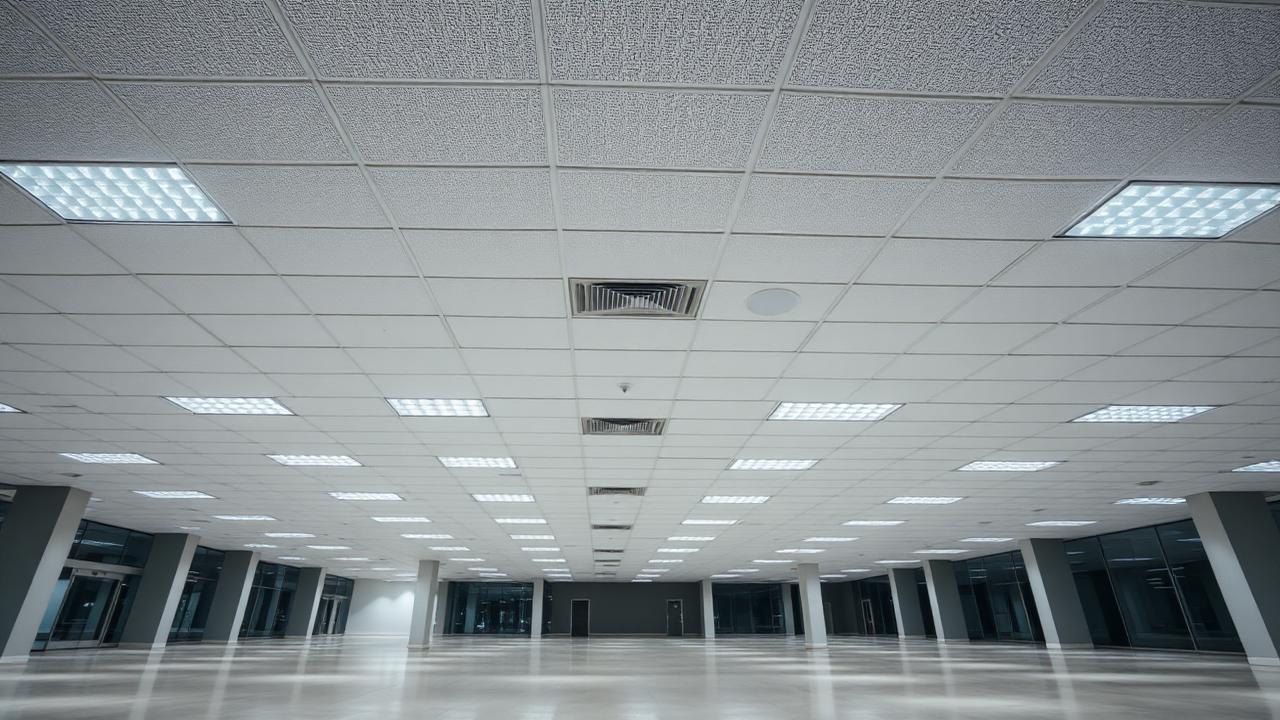
How Moisture Interacts With Commercial Building Systems
Commercial buildings contain layered systems that interact closely. Roofing, insulation, mechanical systems, and interior finishes are interconnected.
When moisture enters, it does not affect one system in isolation.
Insulation loses thermal resistance. HVAC systems work harder. Condensation increases.
These interactions accelerate deterioration and expand the scope of damage.
Why Fire and Life Safety Systems Are at Risk
Fire suppression and alarm systems often run through ceiling cavities and wall chases. Moisture intrusion can compromise these systems.
Any impairment to life safety infrastructure elevates urgency.
Commercial roof escalation often becomes critical when safety systems are affected, even if visible damage appears limited.
Why Commercial Leaks Rarely Stay Contained
Low slope commercial roofs allow water to move horizontally. Once inside, moisture can follow the same pattern.
This means that the point of interior damage is often far from the roof breach.
Without prompt response, water continues to migrate, increasing affected areas.
Why Early Signs Are Easy to Miss
Commercial buildings are large. Small leaks may go unnoticed for extended periods.
Maintenance staff may not access all areas daily.
By the time issues are discovered, escalation is already underway.
Why Commercial Roof Escalation Feels Sudden
From the outside, escalation appears abrupt. One day everything seems fine. The next day operations are disrupted.
In reality, the problem has been developing quietly.
The difference is that commercial systems reach failure thresholds faster once moisture is introduced.
How Awareness Changes Response
Understanding commercial roof escalation helps property owners respond earlier.
Instead of waiting for visible damage, attention shifts to early indicators.
This proactive mindset reduces the likelihood of widespread disruption.
Beyond physical damage, commercial roof escalation is driven by operational and safety pressures that do not exist in residential settings. Once a roof issue begins affecting people, processes, or compliance, response timelines compress rapidly.
This is why commercial roof problems often feel urgent even when the visible damage seems limited.
How Operational Disruption Accelerates Decision Making
Commercial buildings support daily workflows that cannot pause easily. Roof issues that interfere with lighting, climate control, or access force immediate decisions.
Temporary workarounds may exist, but they are rarely sustainable.
Each hour of disruption increases cost and risk.
Commercial roof escalation becomes as much about continuity as it is about repair.
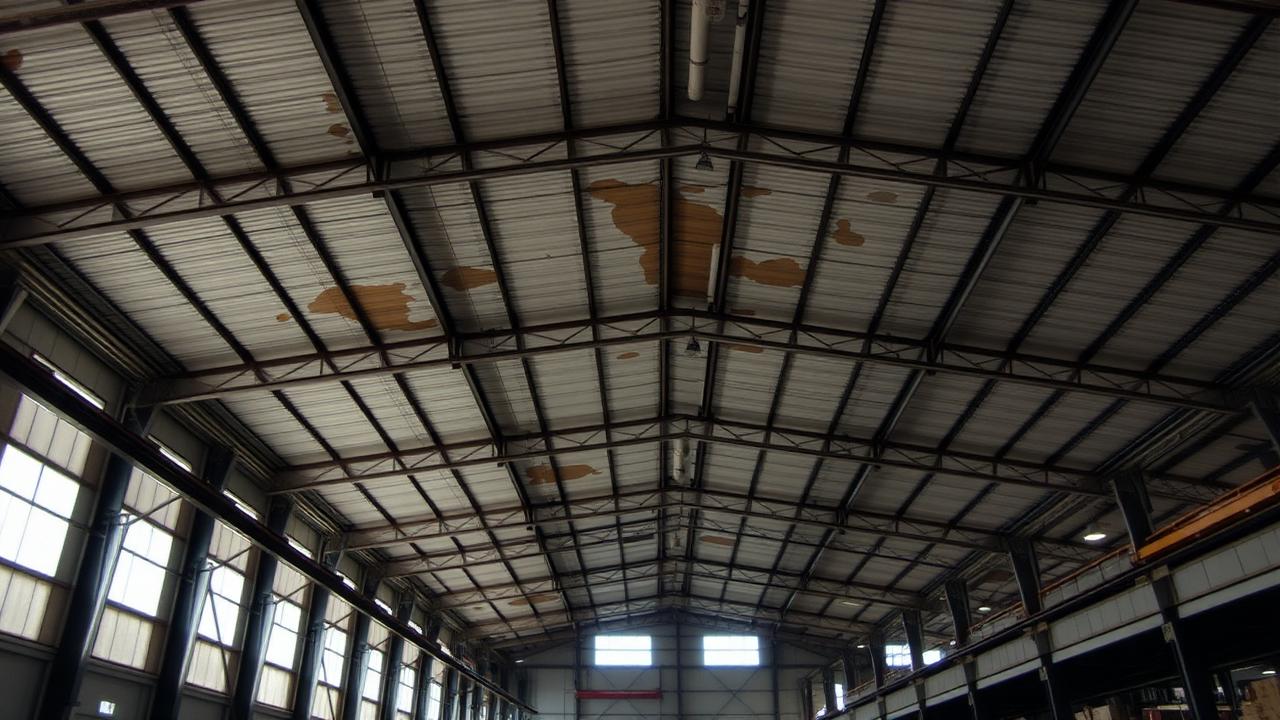
How Commercial Roof Escalation Compresses Decision Timelines
One of the defining characteristics of commercial roof escalation is how quickly decision timelines shrink once a problem becomes visible. In residential settings, homeowners often have flexibility. They can monitor issues, schedule evaluations, and plan repairs over time. Commercial environments rarely allow that same pace.
As soon as roof issues begin affecting occupied spaces, the margin for delay disappears. Even limited disruption creates pressure from multiple directions at once. Operations teams want continuity. Safety managers want hazards eliminated. Tenants want answers. Leadership wants risk contained. These competing priorities compress decision making into a much shorter window.
Commercial roof escalation is not just about physical damage spreading. It is about organizational pressure building. Each additional hour of uncertainty increases stress across departments. Questions shift from "What is happening?" to "How soon can this be resolved?" even when the full scope is not yet known.
Financial exposure plays a major role in this compression. Lost productivity, interrupted services, and potential liability accumulate quickly. In some cases, even a partial shutdown costs more per day than proactive roof stabilization would have cost earlier. This imbalance forces faster decisions, sometimes before complete information is available.
Another factor is responsibility. Commercial property owners and managers are accountable not only for the building, but also for the people inside it. When roof issues create unsafe or unreliable conditions, delay becomes a risk management failure rather than a maintenance choice.
According to the Federal Emergency Management Agency, risk increases when hazards are known but not mitigated in active environments. Commercial roof escalation often reaches this threshold quickly.
This pressure explains why commercial roof decisions often feel rushed compared to residential ones. It is not impatience. It is exposure. The longer the issue remains unresolved, the greater the operational and legal implications become.
Understanding this dynamic helps property owners plan earlier. When roof concerns are addressed before they affect interior spaces, decision timelines remain flexible. Once escalation reaches operations, flexibility disappears.
Commercial roof escalation is predictable in this way. Early attention preserves options. Delay narrows them.
Why Safety Concerns Override Convenience
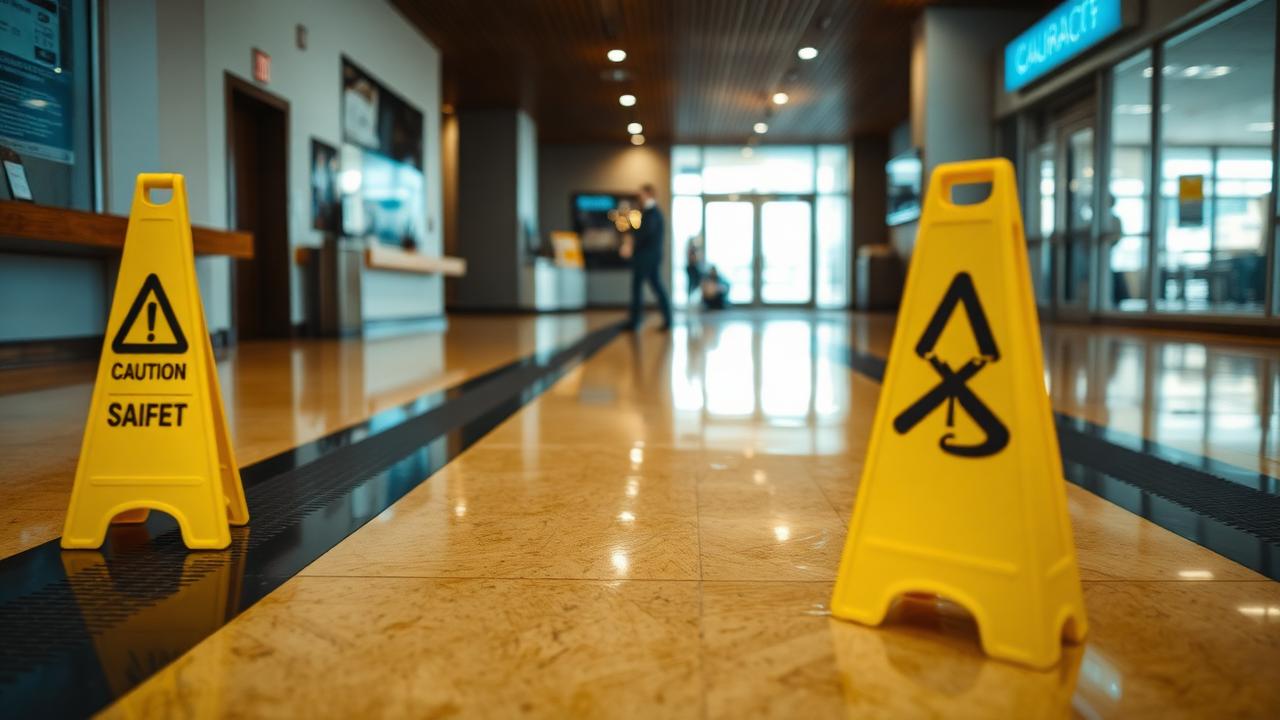
Safety obligations change how problems are prioritized. Water intrusion near walkways, electrical systems, or occupied spaces creates hazards.
Slip risks, electrical exposure, and falling debris are all possible.
Once safety is involved, delay is no longer acceptable.
According to the National Institute for Occupational Safety and Health, maintaining safe environments requires immediate mitigation of hazards, including moisture related risks.
Why Regulatory and Insurance Pressures Matter
Commercial properties are subject to inspections, codes, and insurance requirements.
Roof issues that affect safety or habitability can trigger compliance concerns.
Insurance carriers may require prompt action to limit loss.
These external pressures accelerate escalation timelines.
How Tenant Relationships Increase Stakes
Multi tenant buildings introduce additional complexity.
Roof problems affect multiple occupants with different needs.
Disruptions can strain relationships and create liability exposure.
Commercial roof escalation often involves coordination beyond the property owner alone.
Why Emergency Response Becomes Necessary Faster
Because stakes are higher, emergency response thresholds are lower.
Issues that might be monitored in residential settings require immediate stabilization in commercial environments.
Protecting operations and safety takes precedence.
How Financial Exposure Multiplies
Commercial roof escalation increases costs beyond repair.
Lost productivity, damaged inventory, and temporary relocation add financial pressure.
These indirect costs often exceed the cost of roof work itself.

Why Commercial Roof Escalation Requires Specialized Planning
Because of complexity, commercial roof issues benefit from experienced oversight.
Response must balance protection, continuity, and compliance.
At Action Exteriors, commercial response planning focuses on minimizing escalation while supporting ongoing operations.
Property managers can discuss assessment and response strategies through the Action Exteriors contact page.
Why Early Intervention Changes Outcomes
The earlier commercial roof issues are addressed, the fewer systems are affected.
Stabilization limits spread.
Clear communication reduces disruption.
Commercial roof escalation is not inevitable, but it is predictable.
Why Commercial Roof Escalation Is Often Missed at the Organizational Level
One of the least discussed drivers of commercial roof escalation is not technical at all. It is organizational. In many commercial properties, roof performance falls into a gray zone of responsibility, which allows early warning signs to persist longer than they should.
Unlike residential settings, where one decision maker typically oversees maintenance, commercial buildings involve multiple roles. Property managers, facilities teams, tenants, safety officers, and ownership groups all interact with the building differently. Each group sees only part of the picture.
Roof issues that begin subtly may be noticed by one group but not communicated effectively to others. A maintenance technician may observe minor ceiling staining. A tenant may report intermittent odors. A facilities manager may notice increased HVAC runtime. Individually, these signals may not appear urgent. Collectively, they point toward developing commercial roof escalation.
The challenge is that no single signal triggers action on its own. Commercial roof escalation thrives in gaps between departments. When responsibility is fragmented, early indicators remain isolated instead of being interpreted as part of a larger pattern.
Another contributing factor is reporting hierarchy. In many organizations, maintenance observations must move through layers of approval before action is authorized. Each step introduces delay. By the time a concern reaches decision makers, the issue may already be affecting operations.
Commercial roof escalation is also influenced by budget cycles. Maintenance teams often operate within predefined financial windows. If a roof issue emerges outside of planned budgets, it may be deferred unless it causes immediate disruption. This deferral does not stop deterioration. It simply postpones response.
Additionally, commercial roofs are often perceived as durable by default. Because systems are engineered for large buildings, there is an assumption that they can tolerate minor issues longer. This perception delays escalation response even as moisture interacts with sensitive interior systems.
According to studies referenced by the National Institute of Building Sciences, building envelope failures frequently result from delayed coordination rather than lack of technical knowledge. The issue is not that organizations do not understand roof risks. It is that early indicators are not unified into actionable information.
Commercial roof escalation accelerates once interior systems begin reacting. By that point, organizational response shifts from planning to damage control. Decisions that could have been scheduled calmly now occur under pressure.
Understanding this dynamic allows property owners to intervene earlier. Clear reporting channels, routine cross-department reviews, and defined escalation thresholds reduce the likelihood that roof issues remain fragmented.
Commercial roof escalation is not always a failure of materials. It is often a failure of visibility. When information flows clearly, escalation slows. When it does not, small problems gain momentum.
Why Interior Thresholds Trigger Rapid Commercial Roof Escalation
Commercial roof escalation often accelerates dramatically once interior thresholds are crossed. These thresholds are not always structural. They are functional, operational, and regulatory. Once crossed, response urgency increases sharply, even if roof damage itself has not worsened significantly.
An interior threshold is reached when a roof issue begins interfering with how a space is used. This may involve lighting disruption, humidity changes, equipment exposure, or safety concerns. At that point, the roof problem is no longer isolated to the building envelope. It becomes an operational issue.
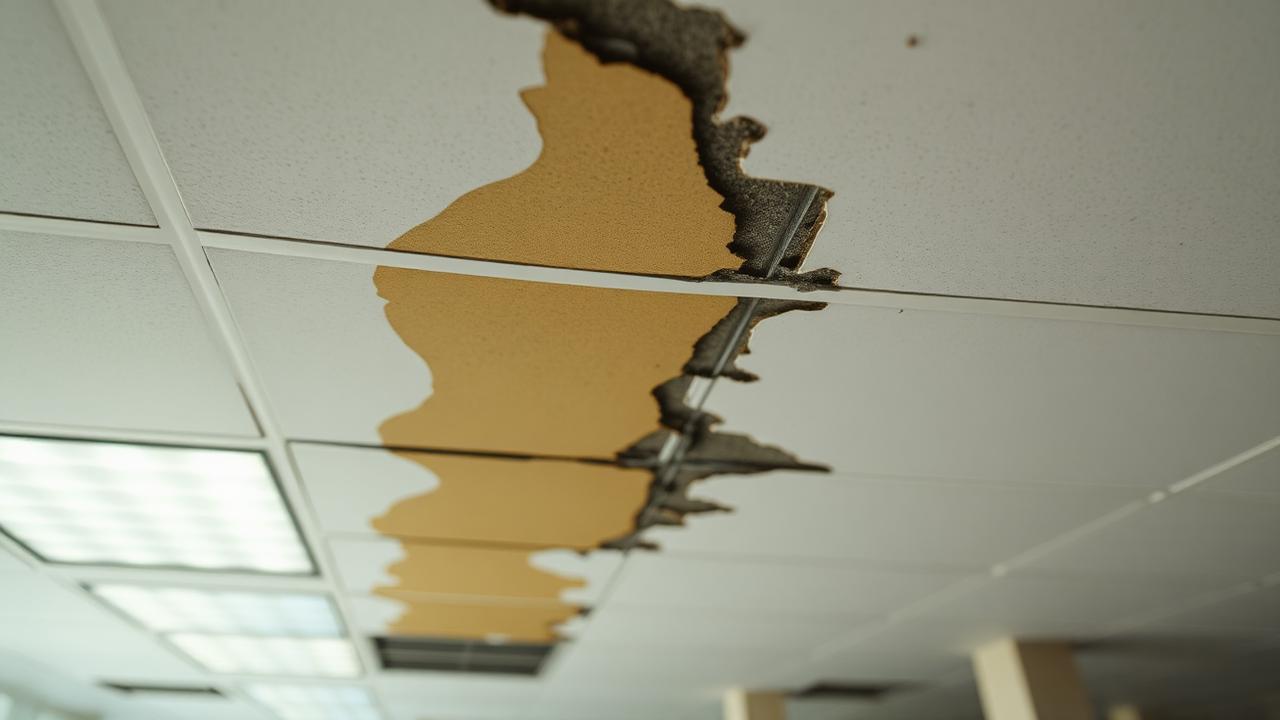
Commercial interiors are designed for controlled conditions. Temperature, airflow, lighting, and safety systems all depend on stable infrastructure. When moisture enters, these systems react quickly. Ceiling tiles sag. Sensors malfunction. HVAC systems compensate inefficiently. Electrical components may require shutdown.
Once these reactions begin, commercial roof escalation shifts from a maintenance concern to a performance risk. Operations teams may need to reroute workflows. Safety officers may restrict access. Tenants may demand immediate resolution.
This threshold crossing compresses timelines. Decisions that might have been scheduled over weeks now must be made in days or hours. The roof has not necessarily failed catastrophically, but the interior environment can no longer tolerate continued uncertainty.
Another key factor is compliance. Commercial buildings are subject to safety regulations, occupancy standards, and insurance requirements. Interior moisture that affects fire suppression systems, alarms, or egress routes triggers mandatory action.
According to guidance from the Occupational Safety and Health Administration, environmental hazards that impact worker safety must be addressed promptly. Once roof related moisture creates such hazards, delay is no longer an option.
Commercial roof escalation also accelerates because interior systems amplify damage. Moist insulation reduces energy efficiency. Damp materials degrade faster. Odors spread through ventilation systems. What began as a localized issue expands across the building.
Financial exposure rises sharply at this stage. Disrupted operations, damaged inventory, and temporary relocation costs add pressure. These indirect costs often exceed the cost of roof stabilization itself.
This is why commercial roof escalation feels sudden. The roof problem may have existed quietly, but once interior thresholds are crossed, tolerance disappears. The building demands action.
Understanding these thresholds allows property owners to intervene earlier. When roof issues are addressed before they affect interior performance, escalation remains manageable. Once interior systems react, escalation becomes unavoidable.
Commercial roof escalation is not defined by the size of the leak. It is defined by the moment the building can no longer function normally. Acting before that moment preserves control.
Final Thoughts
Commercial roof issues escalate faster because the environments beneath them are more sensitive, more active, and more regulated.
Interior vulnerability, operational demands, and safety responsibilities raise the stakes.
Understanding these factors helps property owners act earlier, protect people, and control outcomes before problems expand beyond the roof itself. This can benefit the owner in the future by arriving ahead of the problem.